Black streaks across a shingle roof can make an otherwise well-kept home look neglected. More importantly, they often signal organic growth that deserves attention before it spreads. Professional roof cleaning is not simply a curb-appeal service. Done correctly, it is preventive maintenance that helps protect the shingles, drainage system, and long-term value of the home.
For homeowners in Southern Westchester, roofs face a demanding mix of humid summers, tree cover, freeze-thaw cycles, wind-driven debris, and seasonal leaf buildup. Those conditions create a welcoming environment for algae, moss, lichen, and moisture retention. The right response is not aggressive washing. It is a careful inspection and a roof-specific cleaning plan that removes the problem without creating a new one.
What Is Growing on Your Roof?
Many dark roof stains are caused by algae, often Gloeocapsa magma. It feeds on the limestone filler commonly found in asphalt shingles and spreads through airborne spores. It may begin as faint streaking, then become broad black discoloration on areas that receive less sun or stay damp longer.
Moss is more visible and can be more concerning. It forms a green, spongy layer that holds water against the roof surface. As it grows, moss can lift shingle edges, interfere with water shedding, and create conditions where moisture remains trapped longer than it should. Lichen, which can look like flat gray-green patches, bonds firmly to shingles and should be handled with patience rather than scraped away.
Not every stain means a roof is failing. A roof can have algae growth and still have years of useful service left. At the same time, staining can hide more serious concerns, including missing granules, cracking, exposed nail heads, loose shingles, or compromised flashing. That is why a proper assessment should come before any treatment recommendation.
Roof Cleaning Is Not Pressure Washing
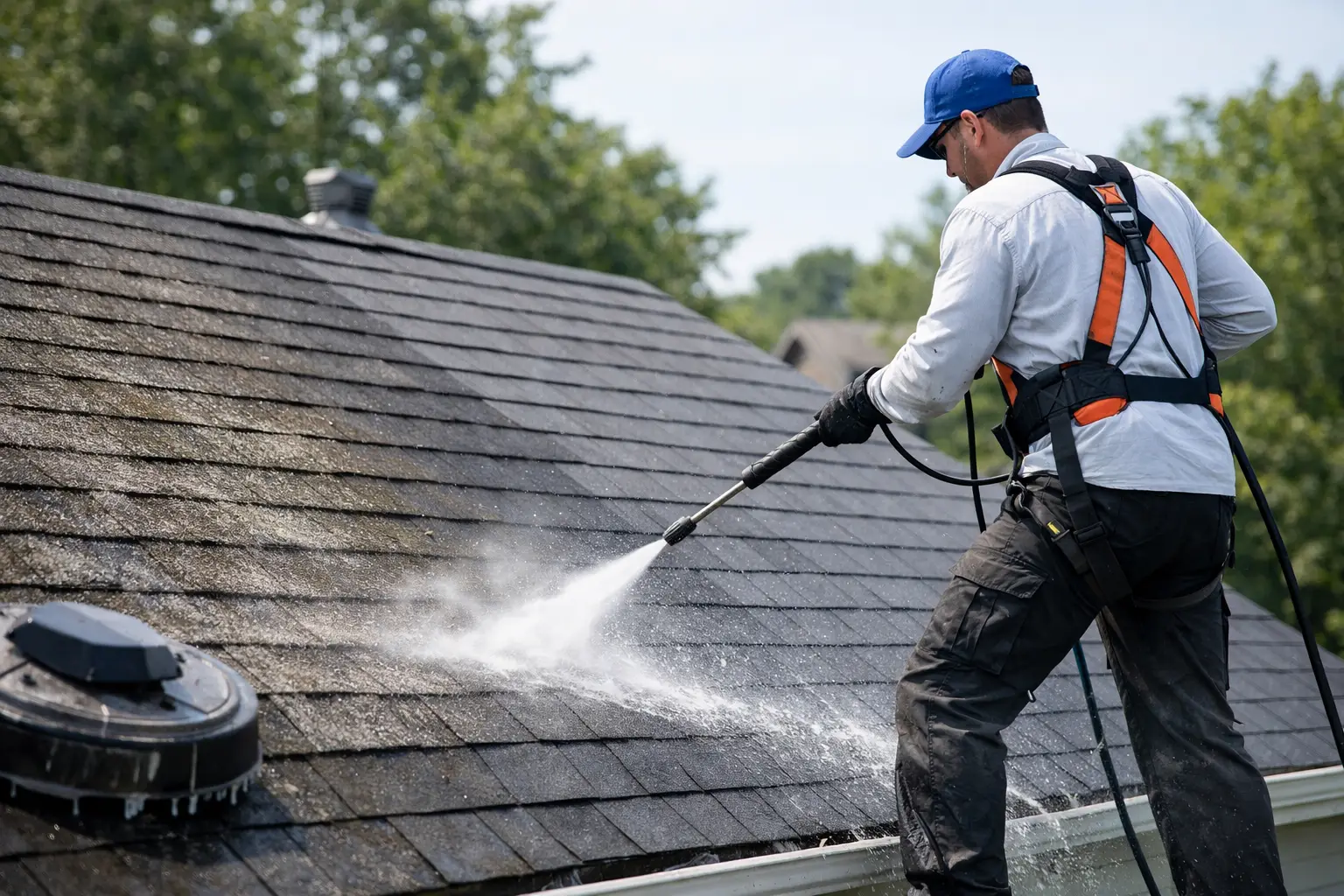
One of the most common and costly mistakes is treating an asphalt-shingle roof like a driveway. High-pressure washing can strip protective granules from shingles, force water beneath them, and shorten the roof’s service life. It may make a roof look cleaner for the moment while quietly causing damage that is expensive to correct.
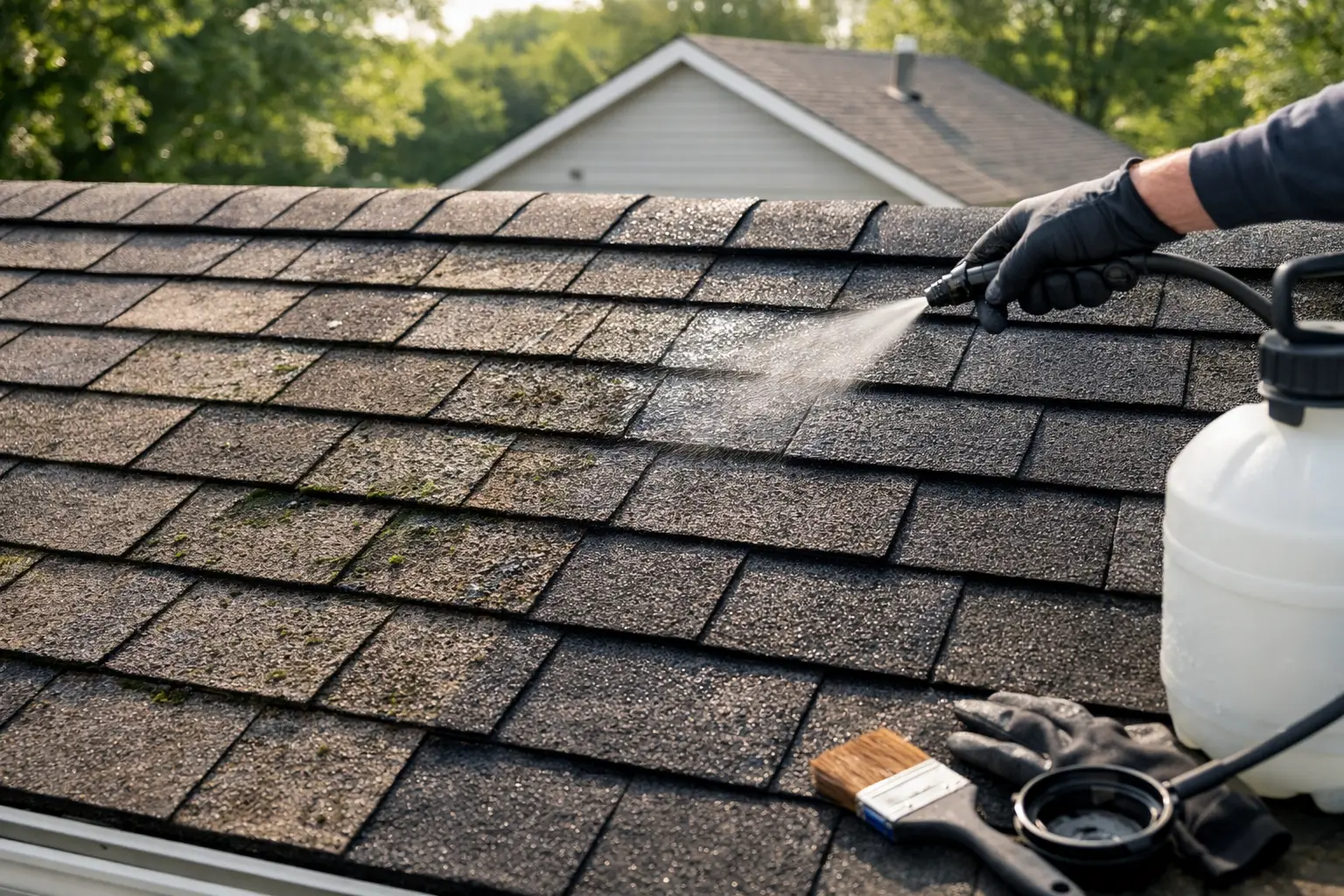
A safer approach uses low-pressure soft washing with a roof-appropriate solution. The solution addresses the organic growth, while gentle application and controlled rinsing protect the shingle surface. The goal is to kill and release algae, moss, and lichen without blasting the roof.
Some growth, especially established lichen, does not disappear immediately. After a proper treatment, it may lighten and release naturally over time as weather does its work. That can be the right outcome. Trying to force every mark off in one visit can lead to unnecessary abrasion and shingle damage.
A responsible roof cleaning process also includes protecting the property below. Nearby plants should be pre-wet, monitored during treatment, and rinsed afterward. Gutters and downspouts should be considered so runoff is managed appropriately. A careful crew protects landscaping, siding, windows, and hardscapes as part of the job, not as an afterthought.
The Benefits Go Beyond a Cleaner Roof
A clean roof restores visual contrast and can make the entire exterior look better maintained. For a homeowner preparing to sell, that improvement can strengthen a buyer’s first impression. For homeowners staying put, it is simply easier to enjoy a home when the roof no longer looks stained or neglected.
The larger benefit is prevention. Algae, moss, leaves, and branches can hold moisture where it does not belong. Removing that buildup supports proper water shedding and gives you a clearer view of the roof’s actual condition. Regular attention also makes it easier to spot a small repair need before it becomes an interior leak or a more involved roofing project.
Roof cleaning can also complement gutter maintenance. When gutters are clogged, water can back up at the roof edge, soak fascia boards, and overflow near the foundation. Cleaning the roof while ignoring blocked gutters leaves part of the drainage problem unresolved. The best maintenance plan looks at the entire path water takes from the roof to the ground.
When Should You Schedule Roof Cleaning?
There is no single calendar date that fits every home. The best time depends on the roof’s condition, its exposure to trees and shade, the amount of visible growth, and the weather. A south-facing roof with open sun may stay cleaner than a heavily shaded roof beneath mature trees, even when both homes are on the same street.
Spring is a practical time to assess winter debris and identify new staining. Fall is also valuable, particularly after leaves begin to accumulate in valleys and gutters. However, visible moss or widespread algae should not be ignored simply because it is not the season you planned for maintenance. Addressing active growth early is usually easier than waiting for it to become established.
Weather matters on service day. Treatments should be applied under appropriate conditions, with attention to temperature, rain forecasts, wind, and the time needed for the solution to work. A professional should explain those considerations clearly instead of promising a one-size-fits-all schedule.
Can an Older Roof Be Cleaned?
Often, yes, but age alone should never decide the answer. An older asphalt-shingle roof may benefit from cleaning if the shingles are still structurally sound and the roof has enough remaining service life to justify maintenance. On the other hand, widespread cracking, curled shingles, major granule loss, soft decking, recurring leaks, or failing flashing may point to repair or replacement rather than cosmetic cleaning.
This is where an honest assessment matters. Homeowners should not be sold a treatment just because it is available. Photos of the roof’s condition, a clear explanation of what is being seen, and straightforward options help you make a sensible decision for your home and budget.
For eligible roofs, a plant-based shingle preservation treatment may be worth discussing after cleaning. Asphalt shingles gradually lose oils as they age under ultraviolet exposure and changing weather. A USDA Certified Biobased preservation treatment is designed to help replenish flexibility and support shingle performance. It is not a cure for a roof that has already reached the end of its life, but it can be a practical option for roofs that are good candidates for maintenance instead of premature replacement.
That distinction is essential. Preservation is about extending usable life where the roof condition supports it. It should never be presented as a substitute for necessary repairs or a new roof when those are genuinely needed.
What Homeowners Should Avoid
The temptation to handle visible stains with a rental pressure washer, harsh scraping tool, or random chemical mix is understandable. Roof work is high-risk, and incorrect methods can cause both personal injury and material damage. Walking on a roof can scuff shingles, disturb weak areas, and create fall hazards, especially when moisture or cleaning products are present.
Avoid dry scraping moss from shingles. Avoid high-pressure equipment. Avoid allowing strong products to run unchecked across landscaping. Also be cautious about services that promise to make every roof look brand new in a few hours without first inspecting its condition. A roof deserves more care than a quick visual fix.
A trained, insured exterior-maintenance provider should be able to explain the method, identify limitations, protect the surrounding property, and tell you when cleaning is not the right answer. That kind of recommendation may not always be the most dramatic one, but it is the one that protects your investment.
A Practical Plan for a Healthier Roof
Start with an assessment of stains, moss, debris, shingles, flashings, valleys, and gutters. If cleaning is appropriate, use a low-pressure process designed specifically for asphalt shingles. Then consider the conditions that caused the growth in the first place, such as overhanging branches, persistent shade, gutter overflow, or poor debris control.
Roof Rescue Southern Westchester approaches this work with the same practical mindset homeowners expect from a firefighter-owned local team: inspect carefully, protect the property, and recommend only what the roof actually needs. A free roof assessment can replace guesswork with clear information and help prevent a minor exterior-maintenance issue from becoming a major expense.
A roof does not need to look perfect to be worth protecting. It needs the right attention at the right time, before organic growth and neglected drainage have a chance to turn a manageable job into an avoidable replacement.
continue reading
Related Posts
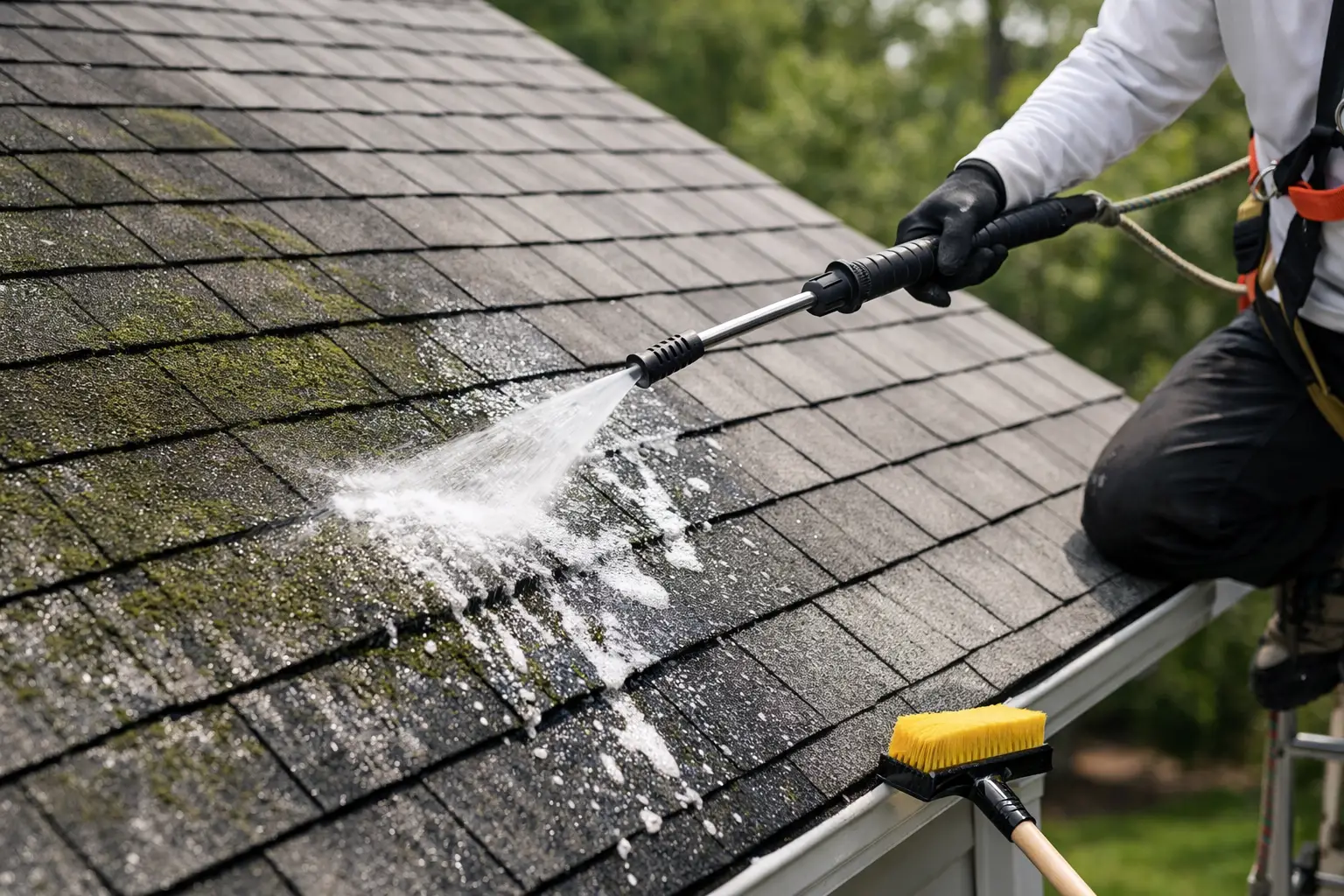
Learn how to remove algae from shingles safely, protect asphalt roofs, and avoid premature replacement with practical homeowner guidance in Westchester.
Learn how shingle preservation products can restore flexibility, slow roof aging, and help Westchester homeowners avoid premature replacement costs today.
Homeowner roof savings begin with safe cleaning, gutter care, and shingle preservation to help prevent costly, premature roof replacement costs today.