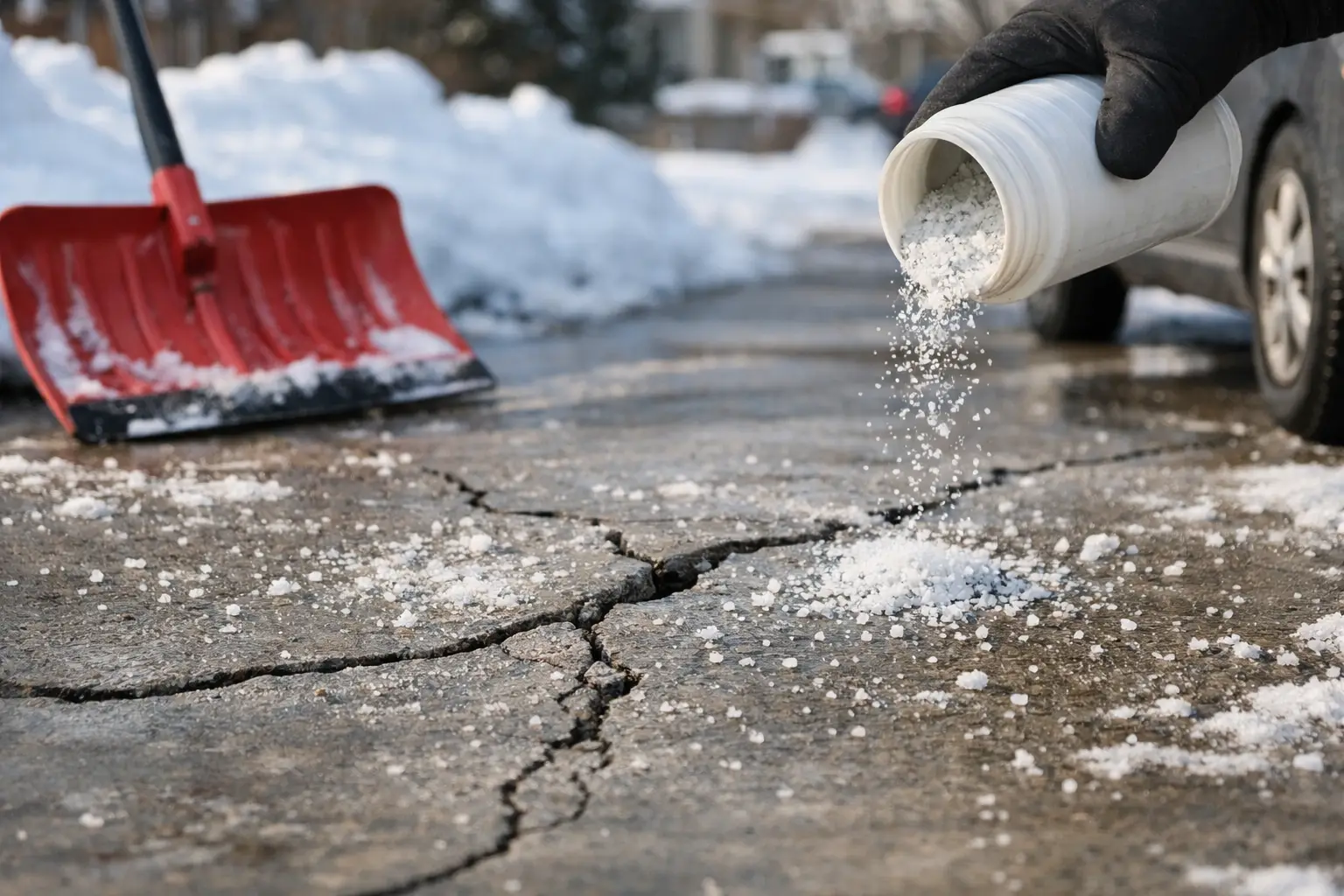
The white residue along a driveway edge may look harmless after a Westchester winter. But when concrete starts flaking, pitting, or shedding thin layers in spring, road salt has often played a role. Learning how to protect concrete from road salt helps homeowners preserve a major investment, keep walkways safer, and avoid repairs that grow more expensive with every freeze-thaw season.
Road salt is not automatically a problem. It makes driveways, front walks, and steps safer when used carefully. Trouble begins when salt, melting snow, moisture, and repeated freezing work their way into unprotected or already weakened concrete.
Why Road Salt Damages Concrete
Concrete looks solid, but it is porous. It absorbs water through tiny openings at the surface. When that trapped water freezes, it expands. As temperatures rise, it thaws and leaves room for more water to enter. This freeze-thaw cycle puts pressure on the concrete from within.
Deicing salts can make that cycle harder on the surface. Sodium chloride, the common rock salt used on roads and walkways, creates a salt solution that moves into concrete with meltwater. The salt itself does not always cause the visible damage, but it keeps the surface wet longer and increases the number of freeze-thaw cycles concrete must withstand.
The result can be scaling, which looks like peeling or flaking patches; spalling, where larger pieces break away; and small pits that collect water and worsen over time. Salt carried in on vehicle tires can be especially tough on driveway entrances and garage floors. Snowplows also push salt-heavy slush onto aprons, curbs, and sidewalks.
Older concrete, concrete with a weak surface finish, and concrete that was installed or cured improperly are more vulnerable. Even good concrete needs help when it faces several New York winters without protection.
How to Protect Concrete From Road Salt Before Winter
The most effective time to protect a driveway or walkway is before the first storm, not after salt damage is already visible. A few practical steps can greatly reduce the amount of moisture and deicer exposure the concrete absorbs.
Start With a Clean, Dry Surface
Concrete sealer cannot do its job if dirt, algae, vehicle residue, or old deicing material is blocking the surface. A proper cleaning removes contaminants so the sealer can penetrate or bond evenly. The concrete must then dry thoroughly before sealing.
This is one reason fall is usually the best time for driveway and concrete sealing in Southern Westchester. Temperatures are often mild enough for the product to cure correctly, and the surface can be protected before winter moisture and deicing materials arrive. Exact timing depends on the sealer, weather forecast, and concrete condition.
Use the Right Concrete Sealer
Not all sealers solve the same problem. For exterior concrete exposed to snow and road salt, a penetrating sealer is often the practical choice. These products absorb into the concrete and help repel water while allowing vapor to escape. Silane and siloxane sealers are common examples used for driveways, sidewalks, patios, and masonry.
A film-forming coating can change the appearance of concrete and may add surface protection, but it must be selected carefully. Some coatings can become slippery when wet, wear unevenly under tires, or trap moisture if the slab has moisture issues. The right choice depends on whether the area is a driveway, a walkway, a garage floor, or decorative concrete.
A quality sealer is not a permanent shield. Traffic, weather, and routine cleaning wear it down. Many exterior concrete surfaces benefit from resealing every few years, though the actual schedule depends on the product, exposure, and how quickly water stops beading on the surface.
Repair Cracks and Failing Areas First
Sealer can help protect sound concrete, but it will not rebuild loose, scaled, or deeply cracked areas. Small cracks should be cleaned and repaired before winter so water cannot keep entering below the surface. Areas that are already spalling may need a compatible repair material or professional assessment before sealing.
This is where an honest inspection matters. Applying a sealer over active deterioration may improve water resistance, but it will not stop damage caused by poor drainage, a failing base, or a badly deteriorated slab.
Use Less Harmful Deicing Methods
The best protection is not relying on salt as the first response to every light snowfall. Clear snow early with a plastic shovel, snow blower, or a plow blade with a rubber cutting edge. Removing snow before it gets packed down reduces the need for chemical deicers later.
When traction is needed, use the minimum amount that works. More salt does not necessarily melt ice faster, and excess material is easily tracked into the garage, carried onto the lawn, or washed into nearby drains. Follow the product label for application rates and temperature limits.
Consider these alternatives based on conditions:
- Sand, traction grit, or non-clumping kitty litter can improve footing without melting ice. They still need spring cleanup, but they do not introduce the same salt load to concrete.
- Calcium magnesium acetate is generally gentler on concrete, vegetation, and nearby metal than common rock salt, though it costs more and may not be necessary for every storm.
- Calcium chloride can melt ice in lower temperatures than sodium chloride, but it should still be used sparingly and according to the label.
- Magnesium chloride can be effective in cold conditions, yet it is not damage-proof and should not be treated as a free pass to overapply deicer.
No deicer is completely consequence-free. Product choice should account for temperature, pets, nearby landscaping, the concrete’s condition, and whether the area has a slope that creates a real slip hazard.
Keep Salt Water Moving Away From the Slab
Drainage is a major part of concrete protection. Standing water at the bottom of a driveway, beside front steps, or along a patio edge gives saltwater more time to soak in. It also creates more opportunities for ice to form.
Keep gutters clean and make sure downspouts discharge away from concrete rather than directly onto a walk or driveway. Extensions, splash blocks, and properly graded soil can reduce concentrated runoff. If water regularly pools in one spot, that issue deserves attention before another winter amplifies it.
For garages, use absorbent mats or trays where vehicles drip melted snow and road brine. Sweep or rinse away accumulated residue when temperatures allow, especially around the garage entrance. Leaving salt-laden meltwater on a concrete floor for weeks is an easy way to invite surface wear.
What Not to Do When Concrete Is Icy
Avoid chipping ice with metal tools, especially on older or scaled concrete. The tool can knock loose a surface that is already weakened. Choose a plastic shovel or a scraper designed for finished surfaces instead.
Do not use hot water to melt ice on concrete when temperatures are below freezing. It may briefly clear the area, but it can refreeze quickly and create a slicker surface. The sudden temperature change can also stress vulnerable concrete.
It is also wise to skip heavily salted homemade mixtures and avoid spreading fertilizer, ash, or other materials not designed for traction or deicing. They can stain surfaces, harm landscaping, and leave you with a bigger cleanup problem in spring.
Spring Cleanup Helps Prevent Next Winter’s Damage
After the final freeze, inspect the concrete closely. Look for new flaking, exposed aggregate, cracks, crumbling edges, and white deposits called efflorescence. Efflorescence is mineral residue left behind when moisture moves through concrete. It is not always serious by itself, but it is a useful signal that water is traveling through the slab.
Sweep away leftover deicer and grit, then rinse the surface when weather permits. A controlled wash can remove salt residue before it continues to sit in pores and joints. High-pressure washing should be used with care. Too much pressure, held too close to the surface, can damage weak concrete and enlarge existing scaled spots.
If you see widespread scaling or recurring problem areas near the driveway entrance, have the concrete evaluated before applying another sealer. The right repair and protection plan should address the source of the damage, not simply cover it up.
For homeowners who want one trusted team to clean, assess, and seal exterior concrete, Roof Rescue Southern Westchester provides practical recommendations based on the condition of the surface. The goal is simple: protect what is still sound, identify what needs repair, and help prevent avoidable replacement costs.
A clean, sealed driveway will not make winter disappear. It can, however, give melting snow and road salt far fewer chances to turn a safe, solid surface into a spring repair project.
continue reading
Related Posts
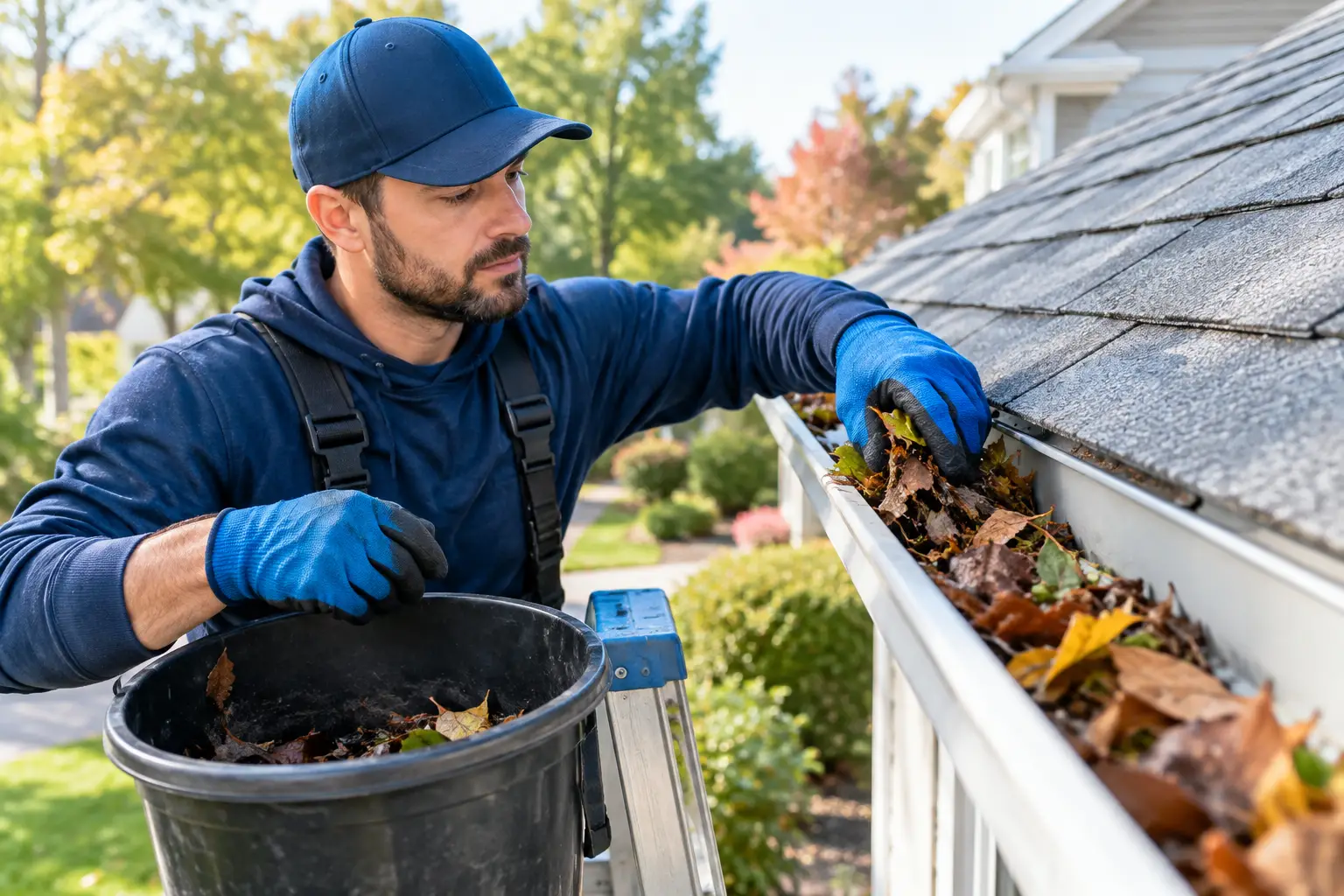
Scarsdale gutter cleaning reviews can reveal a lot. Learn which details point to safe, reliable service, fair pricing, and lasting protection for homes.
Learn how to maintain roof valleys safely, spot early trouble, protect shingles, and know when a Southern Westchester professional should step in today.

Roof restoration can clean, protect, and extend shingle life. Learn when maintenance makes sense and when replacement is the safer call for your home.