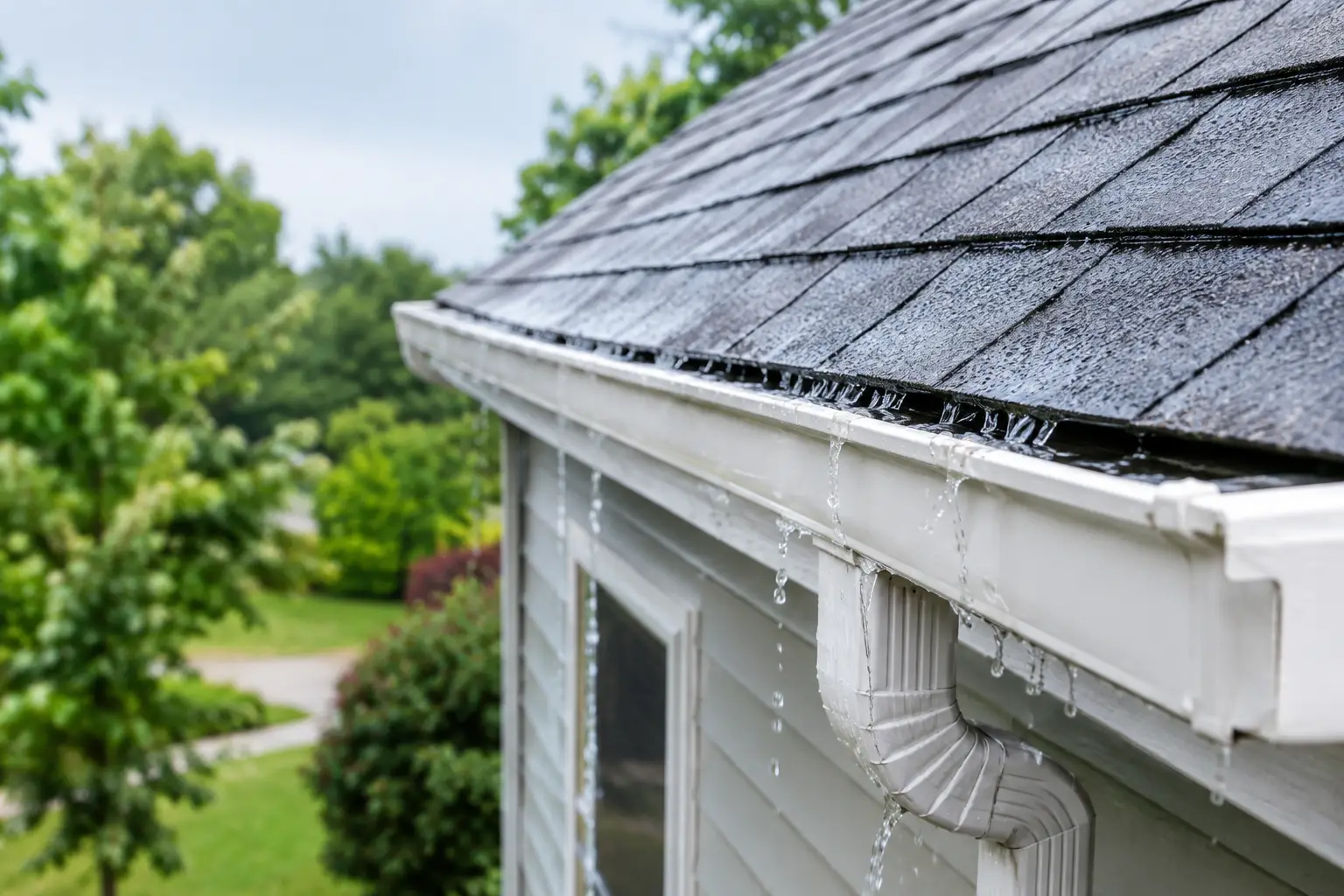
A hard summer downpour can send hundreds of gallons of water off a typical Westchester roof in a matter of minutes. Where that water goes matters. This Westchester roof runoff guide helps homeowners spot the conditions that turn ordinary rain into shingle wear, overflowing gutters, washed-out landscaping, wet basements, and avoidable repair bills.
Roof runoff is not automatically a problem. A healthy roof, clear gutter system, and properly directed downspouts are designed to move water away from the house. Trouble starts when debris, organic growth, damaged components, or poor grading interrupts that path.
What roof runoff carries off your home
Rainwater collects more than water as it travels across an asphalt-shingle roof. Depending on the roof’s condition and its surroundings, runoff may carry loose granules, leaves, pine needles, twigs, roof algae residue, moss fragments, pollen, and sediment from clogged gutters.
A small amount of material in a downspout is normal. A steady accumulation of dark grit, however, deserves attention. Asphalt-shingle granules protect the roof from ultraviolet exposure and help provide its weather-resistant surface. Heavy granule loss can be a sign of age, storm damage, or advanced shingle deterioration.
Organic growth changes the equation as well. Black algae streaks, moss, and lichen hold moisture against the roof surface. Moss can lift shingle edges as it grows, allowing water and wind to work underneath. When debris and growth break loose during storms, they can add to gutter blockages at the exact moment the drainage system needs to perform.
Westchester roof runoff guide: Start at the roof edge
The roof edge is where a manageable drainage issue often becomes visible. During rain, take a look from the ground. Water should enter the gutters in a consistent flow, not pour over the front edge or shoot behind the gutter onto the fascia.
Overflowing gutters usually point to a blockage, but not always. Gutters may be pitched incorrectly, too small for a steep or large roof section, or pulled away from the fascia. A downspout may look clear at the top while remaining packed with wet leaves farther down. In winter, ice can create a temporary obstruction and force meltwater over the wrong edge.
Watch for these signs after a storm: water marks on siding, soil trenches below downspouts, mulch washed onto walkways, standing water near the foundation, or a damp line inside a basement wall. Each clue helps identify where runoff is escaping its intended route.
Do not assume a gutter cleaning alone solves every overflow problem. Cleaning is often the right first step, especially under mature trees in communities such as Scarsdale, Larchmont, and Rye. But a responsible assessment should also look at the gutter pitch, fasteners, downspout capacity, roof valleys, and the condition of the fascia behind the gutter.
Pay attention to roof valleys
A roof valley handles a concentrated volume of water because two roof planes drain into one channel. Leaves and pine needles tend to collect there, particularly after windy weather. If the valley backs up, water can move sideways beneath shingles or spill over a nearby gutter section.
Valley issues are not a do-it-yourself walking project. Asphalt shingles can be damaged by foot traffic, and wet or algae-covered roofs are dangerously slick. A ground-level inspection with photos, followed by professional evaluation when needed, is the safer approach.
Keep runoff away from the foundation
Once runoff leaves the gutter, it needs to travel far enough away from the house. A downspout that ends directly beside the foundation can saturate the soil, even if the gutters are perfectly clean. Over time, repeated saturation may contribute to seepage, settlement concerns, damaged planting beds, and freeze-thaw stress around hardscape.
As a general rule, extensions should discharge water several feet away from the foundation onto ground that slopes away from the home. The exact setup depends on your lot, landscaping, walkways, neighboring properties, and local drainage conditions. A long extension is not useful if it empties onto a patio, creates an icy path, or directs water toward a neighbor’s yard.
Some properties need a more tailored solution, such as buried drain lines, splash blocks, catch basins, or regrading. These improvements can be worthwhile, but they should be planned around the full water path. Moving water out of sight is not the same as moving it somewhere safe.
Check the ground after the rain stops
The best time to assess drainage is shortly after a meaningful rainfall. Look for puddles that remain near the foundation, channels cut through soil, mulch displaced from beds, and water collecting at the bottom of steps or along the driveway.
Also look upward. If water has stained the siding or left dark lines beneath the gutter, the issue began above. Addressing the source protects more than curb appeal. It helps protect trim, siding, windows, and the areas where exterior water can eventually find its way indoors.
Roof cleaning and runoff safety
Homeowners sometimes worry that roof cleaning will harm their lawn, shrubs, or drainage system. That is a fair question. The answer depends on the cleaning method, the products used, the condition of the roof, and whether the work is performed with proper preparation and runoff control.
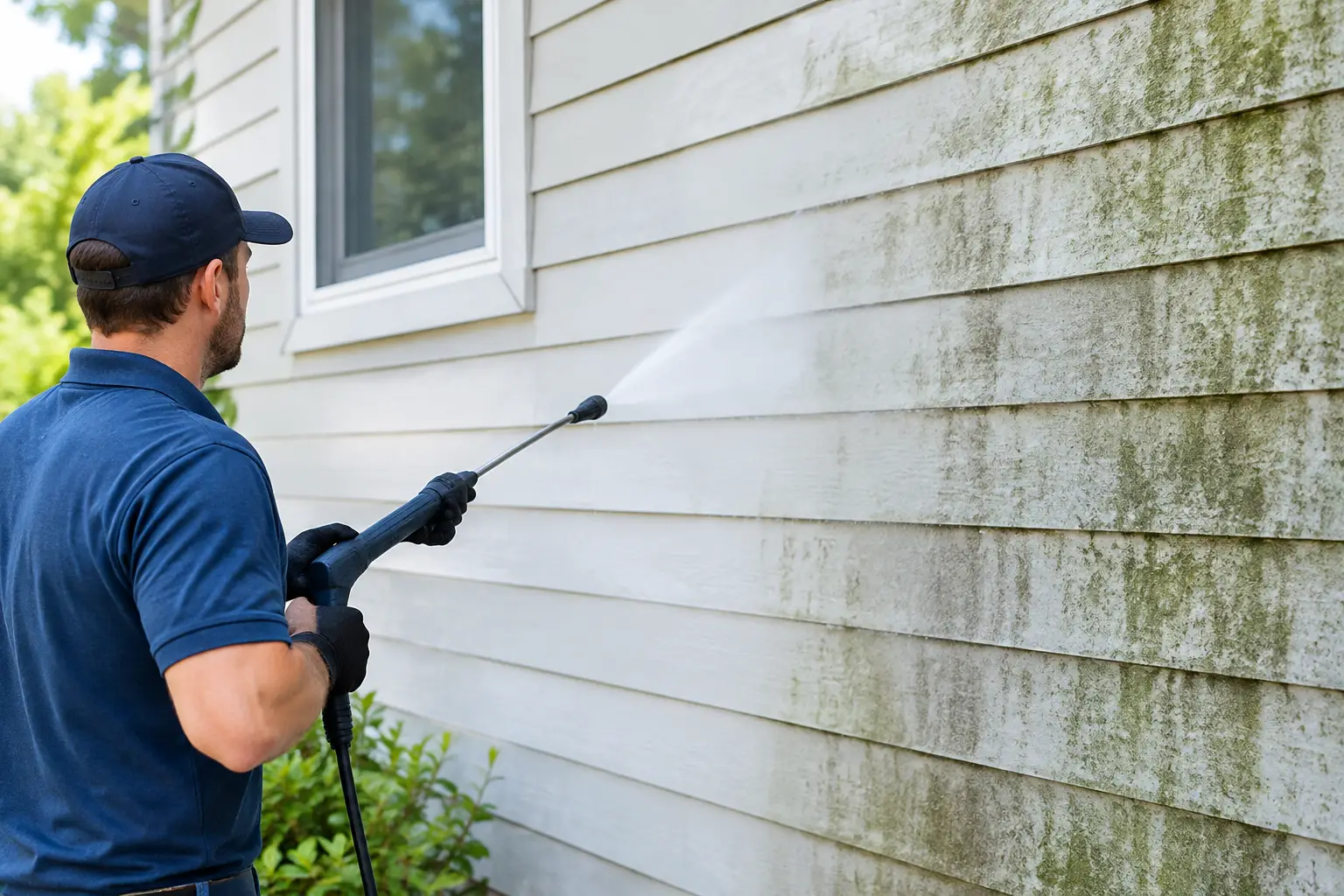
High-pressure washing is not appropriate for most asphalt-shingle roofs. It can dislodge protective granules, break seals, and drive water where it does not belong. A roof should be cleaned with a method suited to the material and the type of growth present, not with the same pressure used on concrete.
Before a professional roof wash, crews should identify sensitive plants, pre-wet landscaping as appropriate, control application, and rinse affected areas according to the treatment process. Gutters and downspouts also need attention because cleaning residue and loosened organic material follow the same drainage route as rainwater.
Plant-based shingle preservation treatments are a separate consideration from cleaning. A USDA Certified Biobased treatment may help restore flexibility to qualifying asphalt shingles that have lost protective oils through age and weather exposure. It is not a fix for active leaks, missing shingles, structural failure, or a roof that has reached the end of its serviceable life. A clear inspection should come before any recommendation.
A maintenance schedule that fits Westchester weather
Southern Westchester homes deal with spring pollen, summer storms, autumn leaf drop, and winter freeze-thaw cycles. One annual look at the gutters may be enough for a home with limited tree cover, but heavily wooded properties often need more frequent service.
A practical routine is to inspect from the ground after major storms, clean gutters after the main fall leaf drop, and check again before winter weather settles in. Spring is a good time to look for winter damage, loose gutter hardware, blocked downspouts, and early algae or moss growth. If you have overhanging branches, trimming them back can reduce debris while limiting roof abrasion during wind events.
Gutter guards can reduce the volume of debris entering a system, but they are not maintenance-free. The right guard depends on roof pitch, tree type, gutter condition, and how water moves through valleys. Fine debris can still collect on top of some guards, and poorly matched products can allow water to overshoot during heavy rain. The goal is fewer blockages, not a promise that the system will never need inspection again.
When runoff calls for professional help
Call for a professional assessment if gutters repeatedly overflow after cleaning, you see water entering the basement, roof valleys collect debris faster than you can safely manage, shingles are curling or losing noticeable granules, or moss is spreading across the roof. These are conditions where guessing can lead to a larger expense.
A good exterior-maintenance provider should explain what is happening, document visible concerns with photos, and separate urgent repairs from routine upkeep. Roof Rescue Southern Westchester takes that approach because a homeowner deserves a practical recommendation, not pressure to replace a roof before its time.
The next time rain moves across your roof, do not just listen for it at the windows. Take a few minutes after the storm to see where it traveled, where it stopped, and what it left behind. That simple habit can catch a small drainage problem while it is still a manageable one.
continue reading
Related Posts
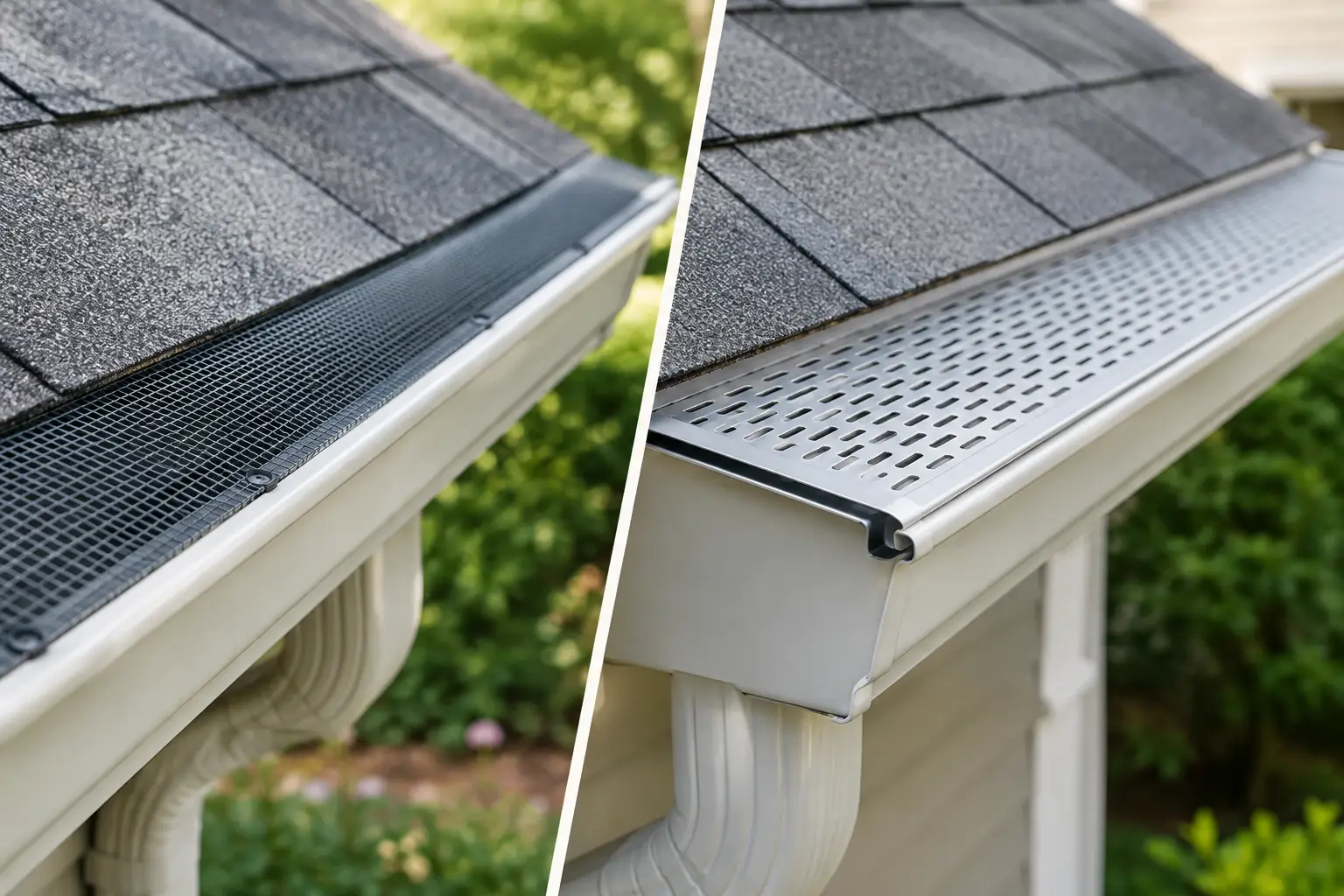
Comparing gutter screens versus guards? Learn which option fits Westchester homes, sheds leaves reliably, and reduces cleaning without trapping debris.
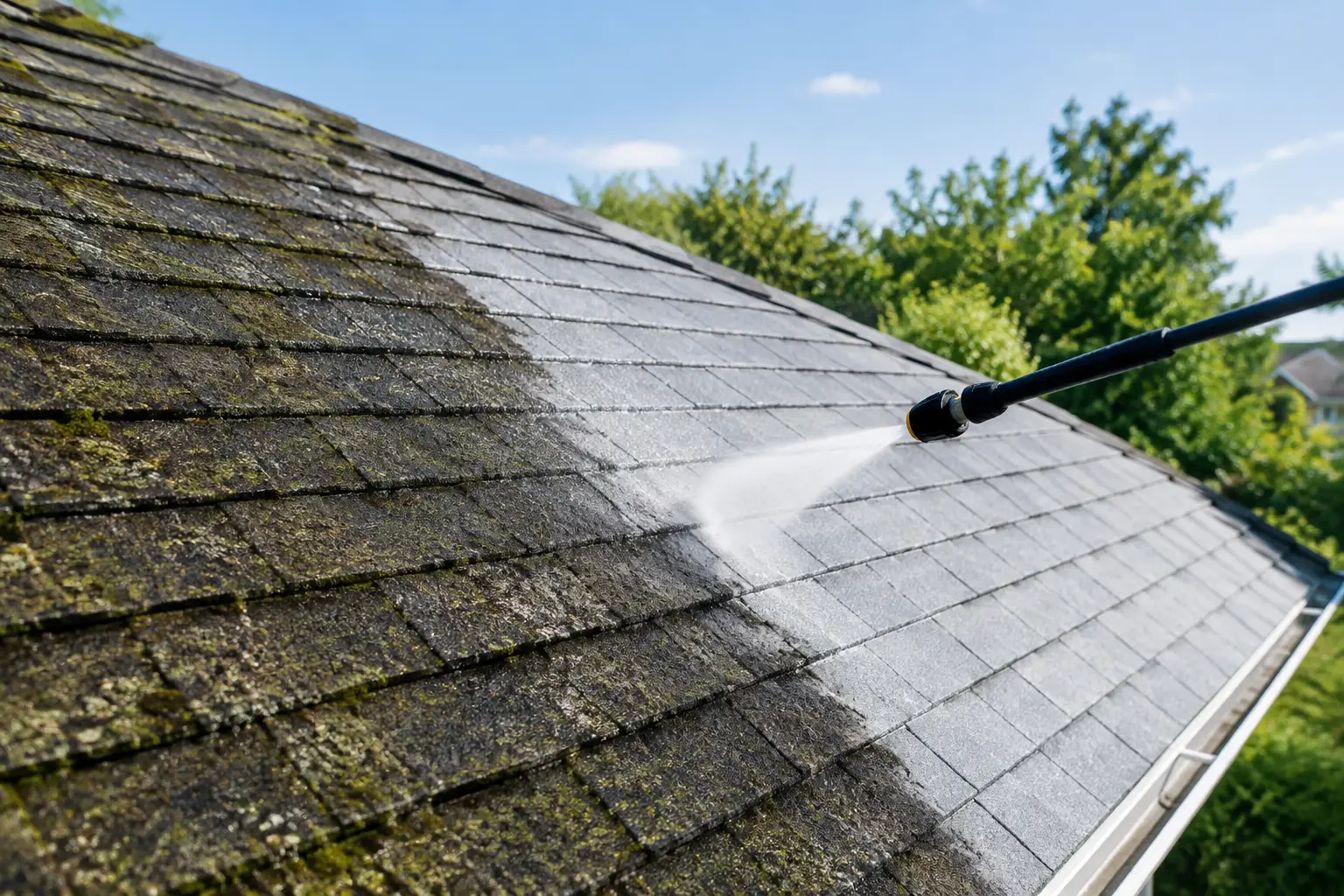
See what real roof cleaning results look like, how long they take, and why safe treatment can protect shingles and help avoid costly replacement bills.
Does soft washing kill mold? Learn how low-pressure cleaning removes exterior growth, when stains suggest damage, and how to protect your home safely.