
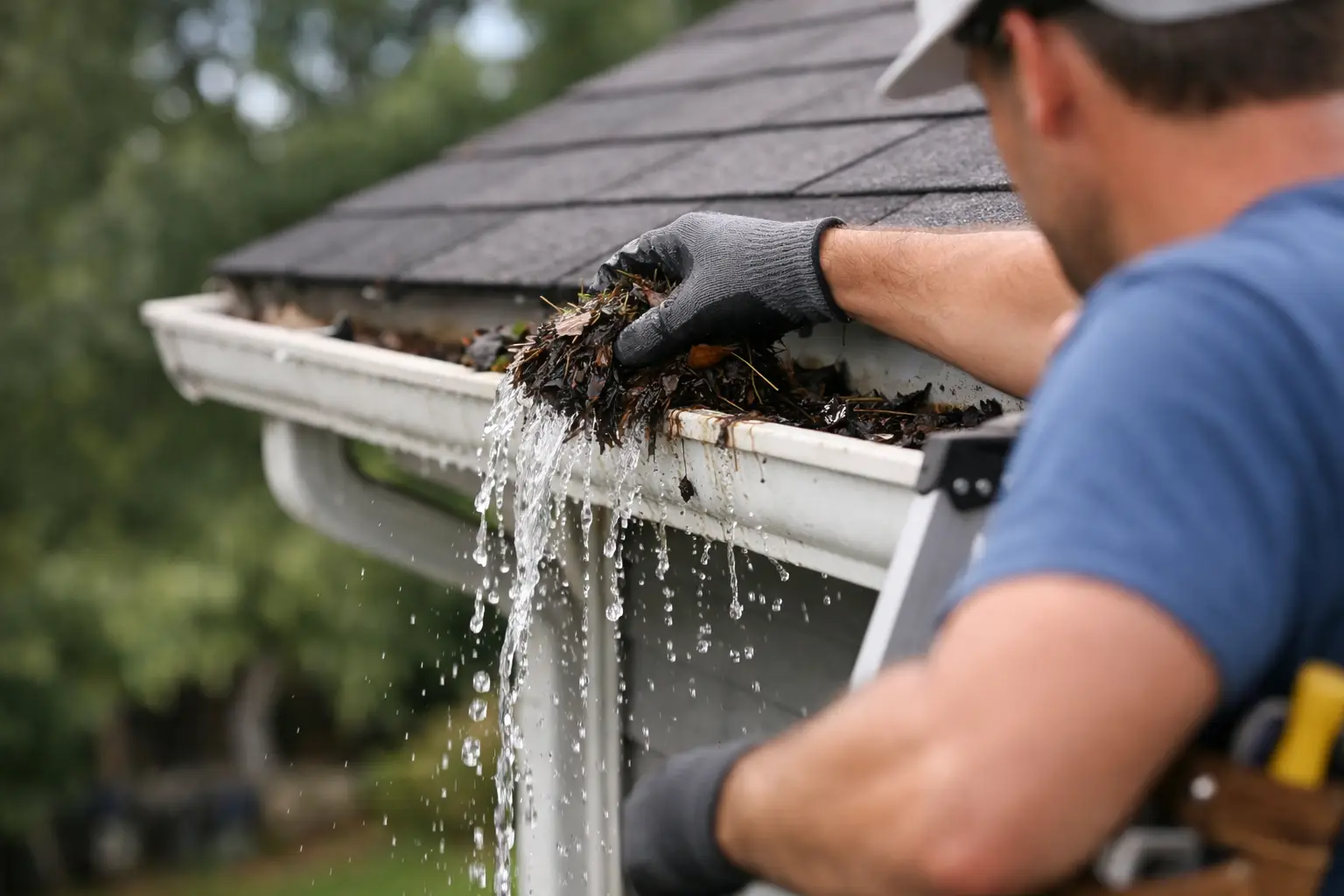
A gutter spilling water over its front edge is more than an annoyance during a hard Westchester rain. If you need to fix overflowing rain gutters, the goal is not simply to clear what you can see. You need to find out why water is backing up, make the correction safely, and confirm that runoff is being carried well away from your foundation.
Overflowing gutters can stain siding, rot fascia boards, wash out landscaping, and allow water to collect near the basement. In winter, trapped water can contribute to ice buildup along the roof edge. Catching the problem early is usually a straightforward maintenance job. Ignoring it can turn a small drainage issue into a much more expensive exterior repair.
How to Fix Overflowing Rain Gutters
Start by observing the gutter during a steady rain, if it is safe to do so from the ground. Note where the overflow begins. Water spilling over the front in one spot often points to a clog or a sagging section. Water cascading over the entire length of the gutter may mean the system is undersized, pitched incorrectly, or overwhelmed by water coming off a steep roof.
Never climb a ladder in wet, windy, or icy conditions. Wait for dry weather, use a stable ladder on firm ground, and have another person nearby. If your roofline is high, your ground is sloped, or you are not comfortable working from a ladder, this is a job better handled by an insured professional.
Clear debris from the gutter channel
Leaves, maple seeds, shingle grit, twigs, and roof moss can form a dense mat inside a gutter. Water may appear to be flowing until it reaches that blockage, then spill over the edge. Wearing gloves, remove debris by hand and place it in a bucket rather than dropping it onto garden beds or walkways.
Pay close attention to corners and the area just before each downspout outlet. Those are common collection points. Once the large debris is removed, rinse the gutter with a garden hose. Begin at the end farthest from the downspout so the water carries smaller material toward the outlet.
If you find a heavy buildup of dark granules, do not assume the gutters are the only problem. A small amount of asphalt-shingle granule loss is normal over time, but large or repeated accumulations can be a sign that shingles are aging or deteriorating. It is worth having the roof condition assessed before a minor gutter service becomes an overlooked roofing issue.
Unclog the downspout completely
A clear gutter can still overflow if the downspout is blocked. Run water into the outlet and watch what happens at the bottom. A slow trickle, bubbling at the top, or water backing up into the gutter indicates a clog somewhere in the downspout or underground extension.
Remove the lower elbow if practical and flush the downspout with a hose. A plumber’s drain snake can help dislodge compacted leaves and mud. Avoid aggressively striking or crushing the downspout, since dents reduce water flow and can create another blockage point.
If the downspout connects to a buried drain, be cautious. The issue may be farther underground, especially if water pools at the downspout base even after the vertical section is clear. Underground drainage failures often need a separate diagnosis rather than repeated gutter cleaning.
Check the gutter slope and fasteners
Gutters need a slight slope toward the downspout. The change is subtle, but it matters. Standing water in a section after cleaning usually means the pitch is wrong, the hangers have loosened, or the gutter has begun to pull away from the fascia.
Look along the gutter line from the ground. Sagging sections, visible gaps behind the gutter, loose spikes, and seams separating from one another all deserve attention. Water is heavy – a clogged 10-foot gutter can hold hundreds of pounds during a storm. That weight can bend the system, damage the fascia, and make overflow worse.
Reattaching a loose gutter is not always as simple as driving in a new screw. If the wood behind it is soft or rotted, the mounting surface must be repaired first. Fastening a gutter into damaged fascia may hold briefly, then fail when the next storm arrives.
Seal leaking seams and end caps
Sometimes what looks like overflow is actually a leak at a seam, corner, end cap, or downspout connection. After the gutter is clean and dry, inspect joints for gaps, rust, or cracked old sealant. Use a gutter-specific sealant on clean, dry surfaces and allow it to cure according to the product instructions.
Seam repairs work well when the gutter is otherwise sound. If there are multiple leaks, widespread corrosion, or sections that have become misshapen, repair after repair may not be the practical choice. Replacing the damaged section can protect the home better and cost less over time than chasing recurring leaks.
Why Clean Gutters Still Overflow
Homeowners are often surprised when a recently cleaned gutter overflows in the next storm. Cleaning is essential, but it does not solve every drainage problem.
The most common reason is water volume. A steep roof, a large roof plane, or a roof valley can send a concentrated rush of water into one short gutter run. In a typical shower, the system may look fine. During a summer downpour, it cannot move water to the downspout fast enough. Adding or relocating a downspout, installing a larger gutter, or improving the drainage layout may be the right answer.
Roof valleys deserve special attention. They channel water from two roof planes into one point, often with enough force to shoot past the gutter during heavy rain. A properly designed valley splash guard can help direct that water into the gutter. It must be installed carefully, though. A poorly placed guard can trap debris or interfere with the roof’s drainage.
Another cause is a gutter installed too high or too low relative to the roof edge. Water should drop into the gutter without allowing snow and ice to tear the system away. This is a balance that depends on roof pitch, shingle overhang, and local weather conditions. It is one reason a full visual inspection is more useful than assuming every overflow comes from leaves.
Protect the Roof Edge While You Address Drainage
Gutter problems and roof-edge problems often travel together. Debris that blocks gutters can hold moisture against the fascia and the lower roof edge. Moss, algae, and organic buildup on shingles can also wash into gutters, adding to clogs and keeping damp material in place.
Avoid pressure washing asphalt shingles or blasting debris under the shingle edges. High pressure can strip protective granules, force water where it does not belong, and shorten the life of the roof. A roof should be cleaned with methods designed for shingle materials, while gutters should be cleared by hand and flushed in a controlled way.
Gutter guards can reduce routine leaf buildup, but they are not maintenance-free. Fine debris, roof grit, and seeds can still collect on top of some guard styles or at the gutter outlet. Guards make the most sense when they match the home’s roof design, surrounding trees, and existing gutter condition. Installing guards over sagging or poorly pitched gutters only hides the original problem.
When to Call for Professional Help
A homeowner can often handle a light seasonal cleaning on a single-story home with safe access. Call for help when the issue involves a high roofline, repeated overflow after cleaning, loose gutters, rotted fascia, underground drains, or signs of roof damage. Water stains on exterior walls, peeling paint near the eaves, basement moisture, and erosion around the foundation are also signals not to wait.
For Southern Westchester homeowners, a professional exterior assessment can connect the dots between roof condition, gutter flow, downspout discharge, and the drainage around the house. Roof Rescue Southern Westchester takes a practical, no-pressure approach: identify the source of the problem, document visible concerns, and recommend only the work that protects the property.
A clear gutter should send water away quietly, even when the forecast turns rough. Checking that flow after the next real rainfall is one of the simplest ways to know your home is ready for the season ahead.
continue reading
Related Posts
Scarsdale gutter cleaning reviews can reveal a lot. Learn which details point to safe, reliable service, fair pricing, and lasting protection for homes.

Learn how to maintain roof valleys safely, spot early trouble, protect shingles, and know when a Southern Westchester professional should step in today.

Roof restoration can clean, protect, and extend shingle life. Learn when maintenance makes sense and when replacement is the safer call for your home.