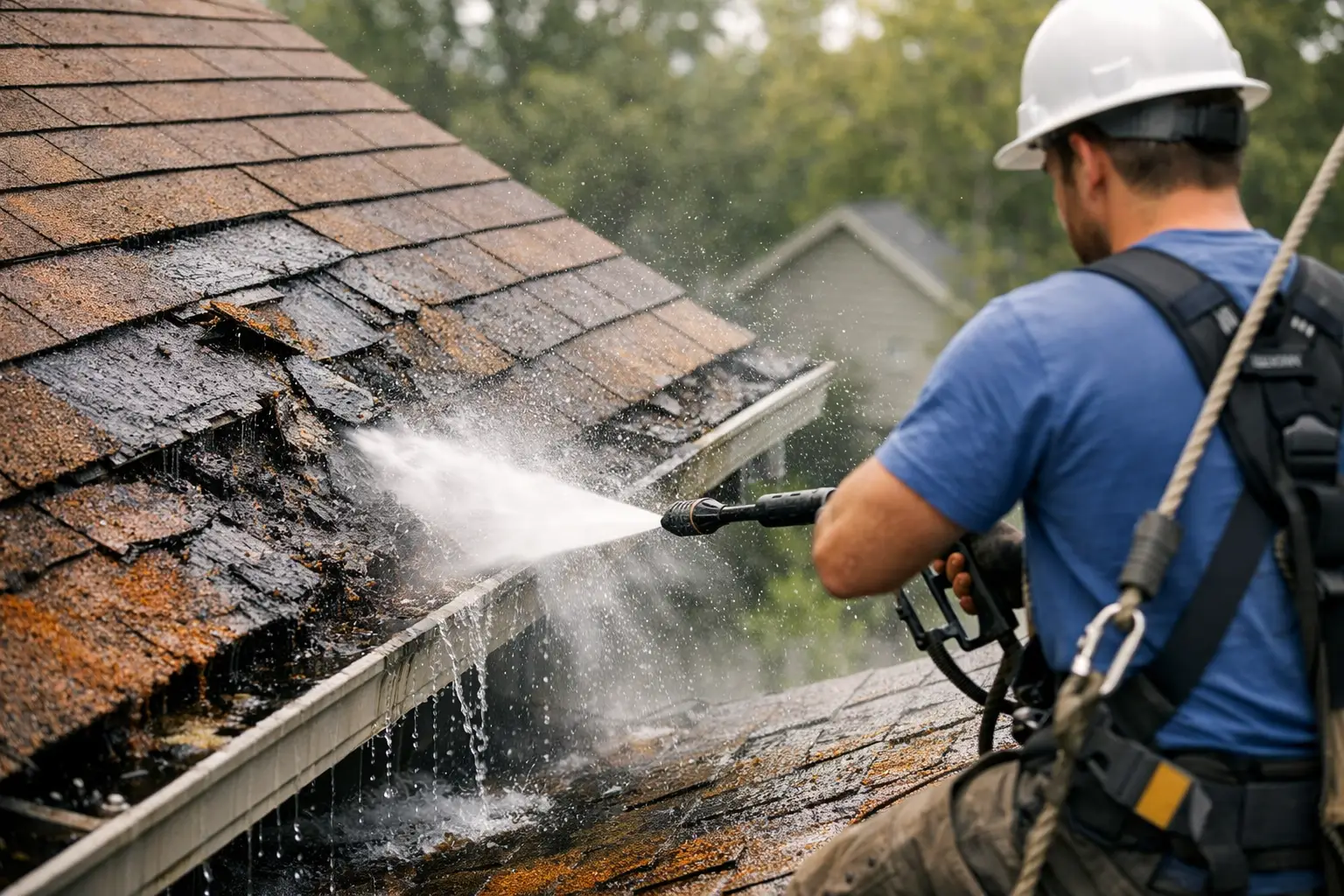
A roof can look dramatically cleaner after a pressure-washing job, but that immediate improvement can hide costly damage. So, is pressure washing a roof safe? For most asphalt-shingle roofs, the answer is no. High-pressure water can strip away protective granules, disturb shingle edges, force water beneath the roofing system, and shorten the roof’s usable life.
That does not mean a stained or moss-covered roof should be ignored. It means the cleaning method matters as much as the result. The safest approach identifies what is growing on the roof, considers the roof’s age and condition, and uses controlled, low-pressure treatment rather than brute force.
Why High-Pressure Roof Washing Is Risky
Asphalt shingles are not designed to withstand the concentrated force produced by a pressure washer. Their surface is covered with mineral granules that help protect the asphalt layer from sunlight, weather, and everyday wear. A high-pressure stream can loosen or remove those granules, leaving the shingle more vulnerable to UV exposure and premature deterioration.
The damage is not always obvious from the ground. A roof may appear clean when the work is finished, while small areas of granule loss, lifted tabs, or weakened sealant strips have already been created. Those issues can become more noticeable during the next heavy rain, winter freeze-thaw cycle, or period of intense summer heat.
Pressure can also drive water up under shingles instead of allowing it to run naturally down the roof. That creates a risk of moisture reaching the roof deck, underlayment, or attic. Even a small water intrusion can lead to stained ceilings, wet insulation, wood deterioration, or mold conditions if it goes unnoticed.
There is also a safety concern for the person doing the work. Roofs are steep, wet, and slippery even before cleaning begins. Adding a powerful spray wand can create kickback, overspray, and unstable footing. Cleaning a roof safely requires the right access, fall protection, equipment control, and a clear understanding of how the roof is built.
Is Pressure Washing a Roof Safe for Any Material?
It depends on the roofing material, its condition, and what people mean by “pressure washing.” Some durable surfaces, such as certain metal or concrete tile roofs, may tolerate carefully controlled washing in specific circumstances. Even then, the pressure setting, nozzle type, spray angle, fastener condition, coatings, and manufacturer guidance all matter.
But for the asphalt-shingle roofs found on many homes in Southern Westchester, high-pressure washing is generally the wrong choice. A roof that is already aging, brittle, curling, or losing granules is especially vulnerable. Cleaning will not restore failing shingles, and aggressive washing can turn a maintenance concern into a replacement decision.
A professional assessment should come before any roof-cleaning recommendation. If the roof has exposed fiberglass matting, significant cracks, missing shingles, active leaks, or widespread deterioration, cleaning may not be appropriate. In that case, the homeowner needs clear documentation of the condition and practical advice about the next step – not a quick cosmetic fix.
What Those Black Streaks and Green Patches Really Mean
Not every dark roof is simply dirty. Black streaks on asphalt shingles are often algae, while green patches may be moss or lichen. These organisms thrive where moisture lingers, especially beneath overhanging trees, near clogged gutters, or on shaded sections of the roof.
Algae primarily affects appearance, but it can make a well-kept home look older than it is. Moss and lichen deserve more attention because they can retain moisture against the shingles. As they spread, they may lift shingle edges and interfere with proper water shedding. Pulling or scraping growth off by hand can cause damage too, particularly when it has attached firmly to the shingle surface.
The right response is not to blast the growth away. It is to use a roof-safe treatment that addresses the organism while protecting the shingle surface. The roof then needs time to release the dead growth naturally through rainfall and weathering. That slower process is often the safer process.
Soft Washing Protects the Roof While Treating Growth
Soft washing uses low-pressure application combined with an appropriate cleaning solution to treat algae, moss, lichen, and organic staining. The objective is to kill and release the growth, not physically scour the roof clean with force.
A proper soft-wash service begins with preparation. Technicians assess the roof material and visible condition, protect nearby plants and exterior surfaces, manage runoff, and use controlled application methods. Gutters and downspouts should be considered as part of the job, since drainage issues often contribute to the moisture conditions that allowed growth to take hold in the first place.
The treatment should be matched to the roof, not applied as a one-size-fits-all solution. Older roofs need extra caution. Homes with extensive landscaping require careful plant protection and rinsing. Roofs with heavy moss may need a staged plan so that the material can release gradually rather than being scraped away.
At Roof Rescue Southern Westchester, the goal is to help homeowners protect the roof they already own whenever its condition supports preservation. That can include safe roof washing and plant-based shingle preservation treatments designed to support aging asphalt shingles. A USDA Certified Biobased treatment is not a substitute for a roof that has reached the end of its life, but for qualifying roofs, preventive care can be far more practical than replacing shingles before replacement is truly necessary.
Warning Signs You Should Not Ignore
A roof cleaning assessment is a good time to look beyond the stains. Organic growth often appears alongside other maintenance issues that deserve attention. Watch for these signs:
- Granules collecting heavily in gutters or at the bottom of downspouts
- Shingles that are curling, cracking, missing, or visibly lifting
- Moss buildup around valleys, flashing, chimneys, or shaded roof sections
- Gutters that overflow, sag, or remain clogged with leaves and roof debris
- Water stains in the attic or on upper-level ceilings
- Tree branches rubbing against the roof or keeping it shaded and damp
These problems do not automatically mean the roof needs replacement. They do mean it should be evaluated before cleaning begins. In many cases, better gutter performance, trimming back branches, and treating early algae growth can reduce the conditions that accelerate roof wear.
How Homeowners Can Choose a Safer Roof-Cleaning Service
Ask direct questions before hiring anyone to clean your roof. A trustworthy contractor should explain whether they use high pressure on shingles, how they protect landscaping, what they do when they find damaged roofing, and whether they carry appropriate insurance. They should be comfortable documenting visible concerns with photos and giving a recommendation that may be different from the service you originally requested.
Be cautious if a company promises an instantly spotless roof by using a powerful machine. A dramatic before-and-after result can be tempting, but roofing materials need protection more than they need aggressive cleaning. The best work may leave some dead moss or staining that continues to fade over time, rather than forcing an unnatural same-day result.
Homeowners should also be wary of anyone who treats cleaning as a cure for every roof problem. Roof washing removes harmful growth and improves appearance. It cannot repair worn shingles, correct poor ventilation, replace failing flashing, or solve a leak caused by damaged roofing materials. Honest maintenance starts with an accurate diagnosis.
Prevention Is Easier Than Rescue
The most affordable roof problem is often the one prevented early. Keep gutters clear so water moves away from the roofline. Address overhanging branches that drop debris and block sunlight. Check the roof after major storms, and do not let black streaks, green growth, or drainage problems sit for years because they seem cosmetic.
For homeowners in New Rochelle, Scarsdale, Rye, and throughout Southern Westchester, changing seasons bring leaf buildup, humid weather, snow, and repeated freeze-thaw cycles. Those conditions make routine exterior maintenance especially valuable. A periodic roof assessment can separate a manageable cleaning need from a larger roofing concern before avoidable damage has time to grow.
If you are considering roof cleaning, start with a free roof assessment rather than a pressure-washing appointment. A clear look at the shingles, drainage, growth, and overall condition gives you the information to protect your home – and make a repair or preservation decision with confidence.
continue reading
Related Posts
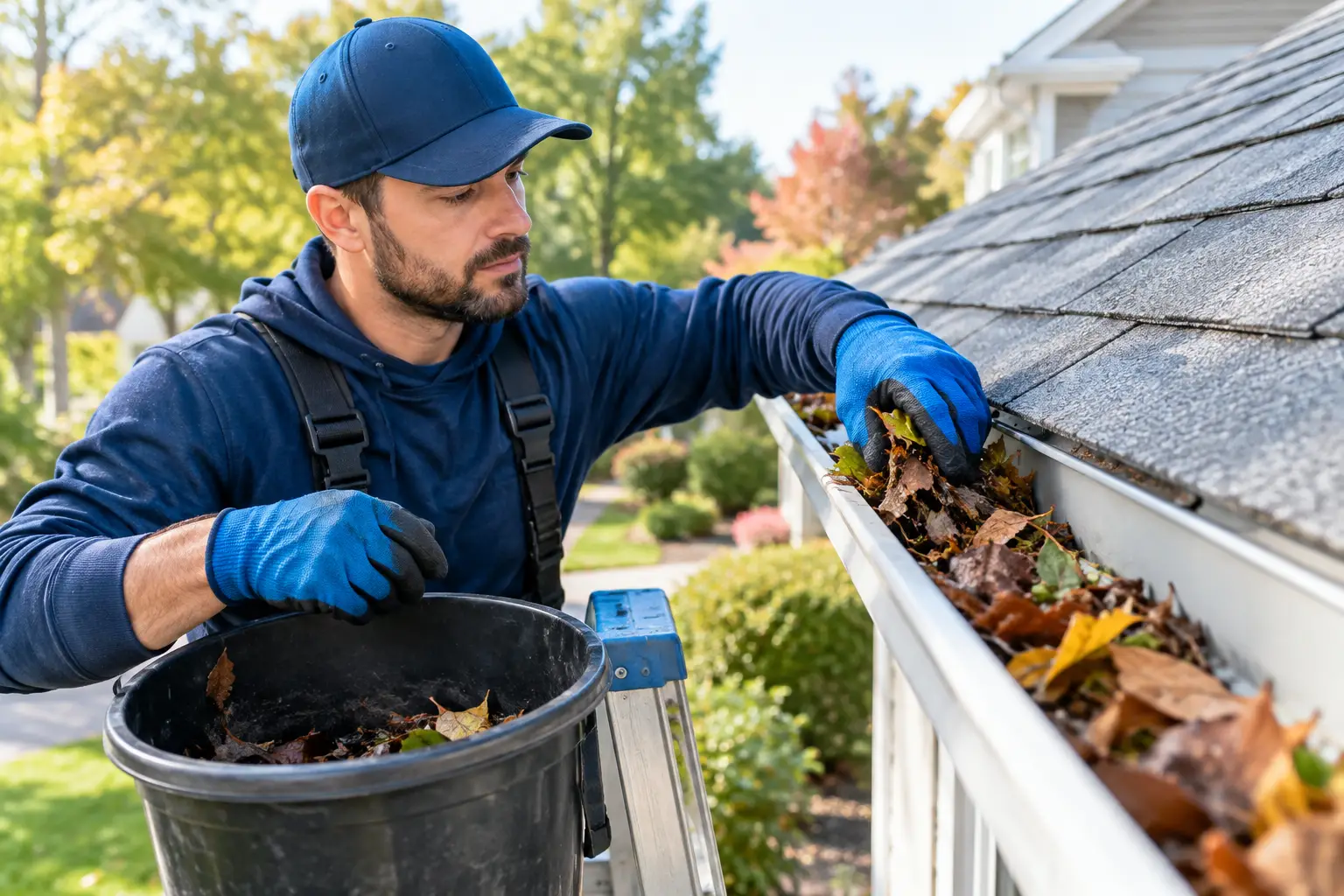
Scarsdale gutter cleaning reviews can reveal a lot. Learn which details point to safe, reliable service, fair pricing, and lasting protection for homes.
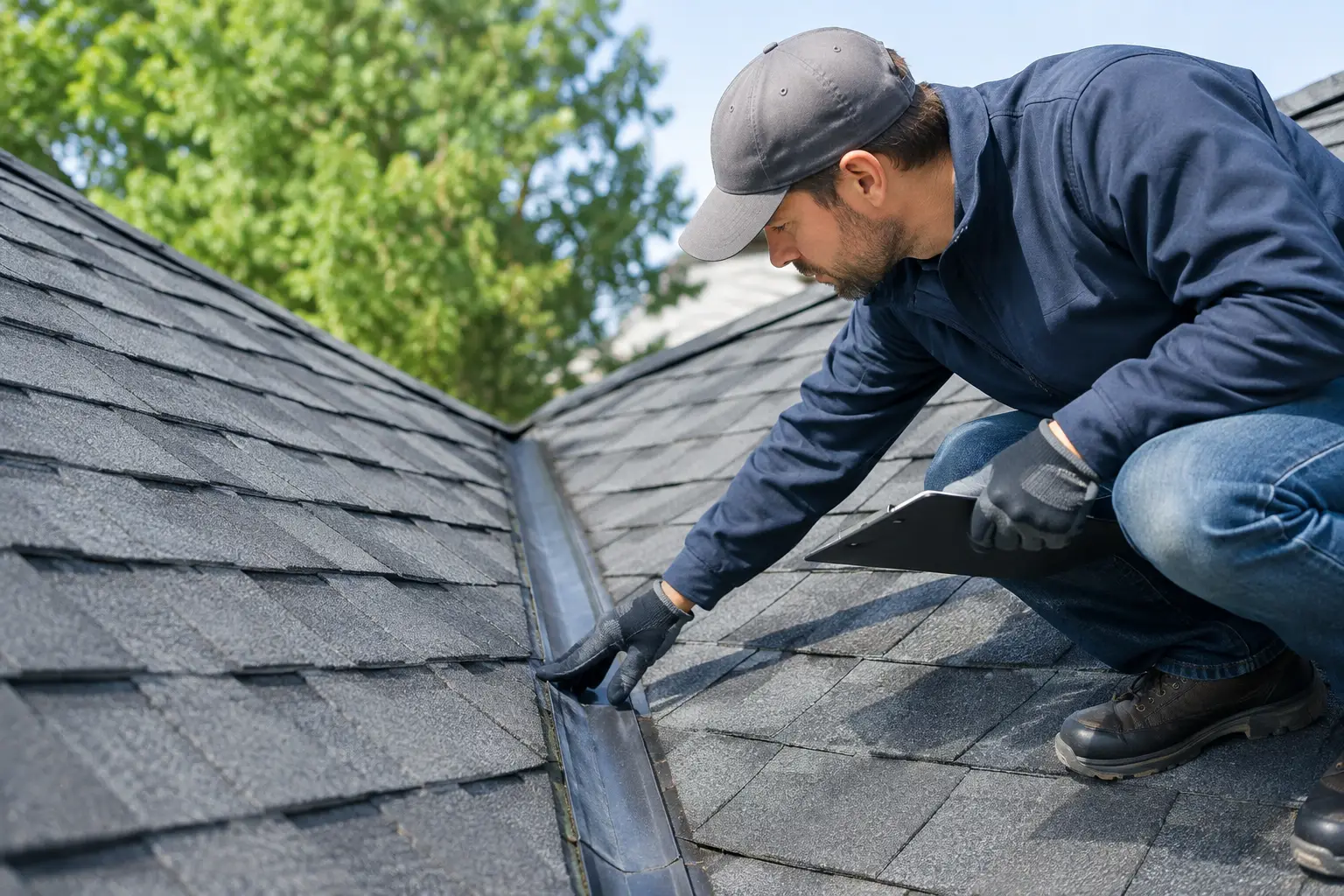
Learn how to maintain roof valleys safely, spot early trouble, protect shingles, and know when a Southern Westchester professional should step in today.
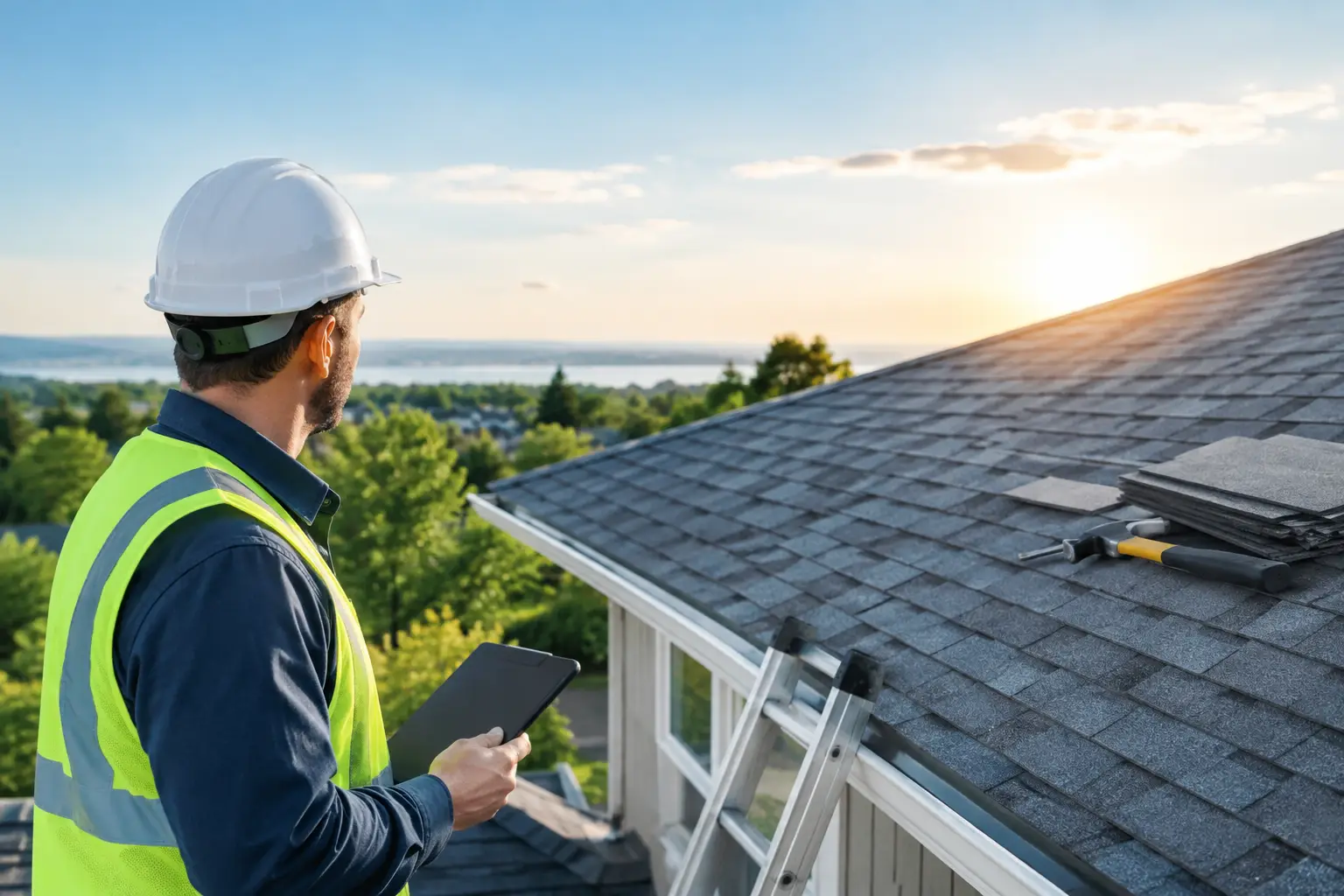
Roof restoration can clean, protect, and extend shingle life. Learn when maintenance makes sense and when replacement is the safer call for your home.