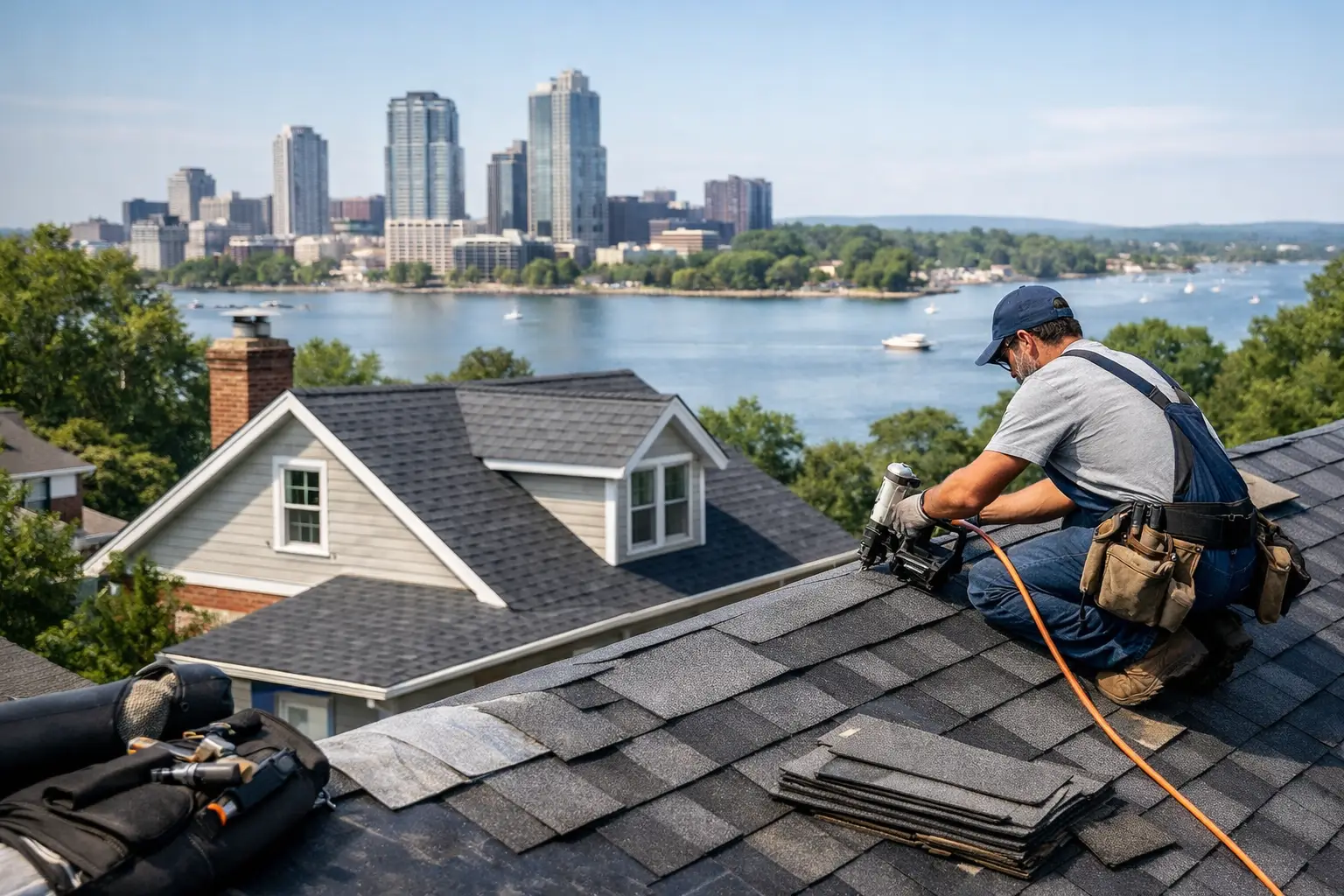
Black roof streaks, green moss at the shingle edges, and gritty material collecting in gutters can make a New Rochelle home look overdue for a new roof. Sometimes replacement is necessary. Often, though, the roof is telling a different story: it needs timely cleaning, targeted maintenance, or shingle preservation before small problems become an expensive project. This New Rochelle roof restoration guide explains how to read those signs and make a sound decision for your home.
A roof restoration plan is not a cosmetic cover-up. Done correctly, it removes damaging organic growth, protects the roof during cleaning, and may help aging asphalt shingles retain the flexibility they need to keep shedding water. The right approach depends on the roof’s actual condition, not just its appearance from the driveway.
Start With the Difference Between Dirty and Worn Out
Asphalt shingles naturally age under New York weather. Sun exposure dries their protective oils, winter freeze-thaw cycles work on edges and seal strips, and rain carries debris into valleys and gutters. Shade from mature trees and damp conditions can accelerate algae, moss, and lichen growth.
Algae is usually responsible for the dark streaking homeowners see across a roof. It holds moisture and can make a roof appear much older than it is. Moss is more concerning because it can grow beneath shingle edges, retain water, and interfere with proper drainage. Lichen attaches firmly to the surface and takes patience to remove safely.
None of those conditions automatically means the roof has failed. A roof with intact shingles, sound decking, and no active leaks may be a strong candidate for cleaning and preservation. But a roof with widespread cracking, curled shingles, exposed fiberglass mat, missing sections, soft roof decking, or recurring interior leaks needs a closer roofing evaluation. No treatment can restore material that has reached the end of its serviceable life.
That distinction matters. Replacing a roof that only needs maintenance is an avoidable cost. Treating a roof that is structurally failing is equally unwise. A good assessment should give you a clear answer either way.
A Practical New Rochelle Roof Restoration Guide
Roof restoration begins with inspection, not equipment. Before anyone washes the roof, the condition of the shingles, flashing, vents, skylights, chimney areas, valleys, gutters, and surrounding landscaping should be reviewed. Photos are useful because they let homeowners see what is happening in locations that are difficult or unsafe to inspect from the ground.
Look for the signs that call for action
Homeowners do not need to climb a ladder to spot early warning signs. From the ground, look for dark streaks, moss clumps, debris built up in valleys, uneven shingle color, lifted edges, and granules accumulating at downspout exits. Inside the attic or top floor, check for water stains, damp insulation, or daylight around roof penetrations.
A few loose granules are normal as shingles age. Heavy or sudden granule loss is not. Granules shield the asphalt layer from ultraviolet exposure, so a roof that is becoming bare in patches deserves professional attention. Likewise, a stain on a ceiling may be caused by flashing, a vent boot, or condensation rather than a failed field of shingles. Diagnosis prevents guesswork and unnecessary work.
Clean the roof with the right method
High-pressure washing is not appropriate for asphalt shingles. It can dislodge granules, break seals, drive water where it does not belong, and shorten the life of the roof you were trying to save.
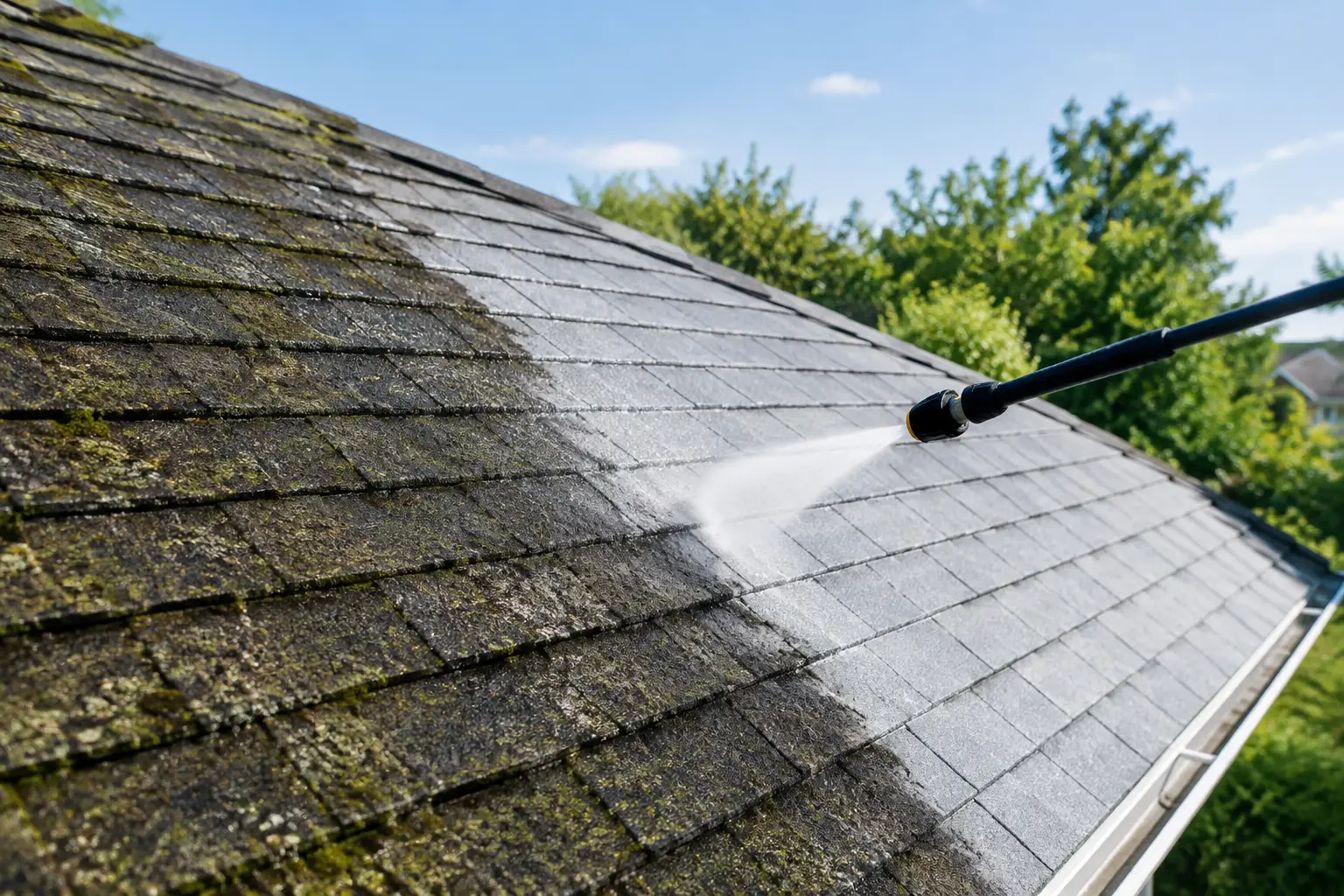
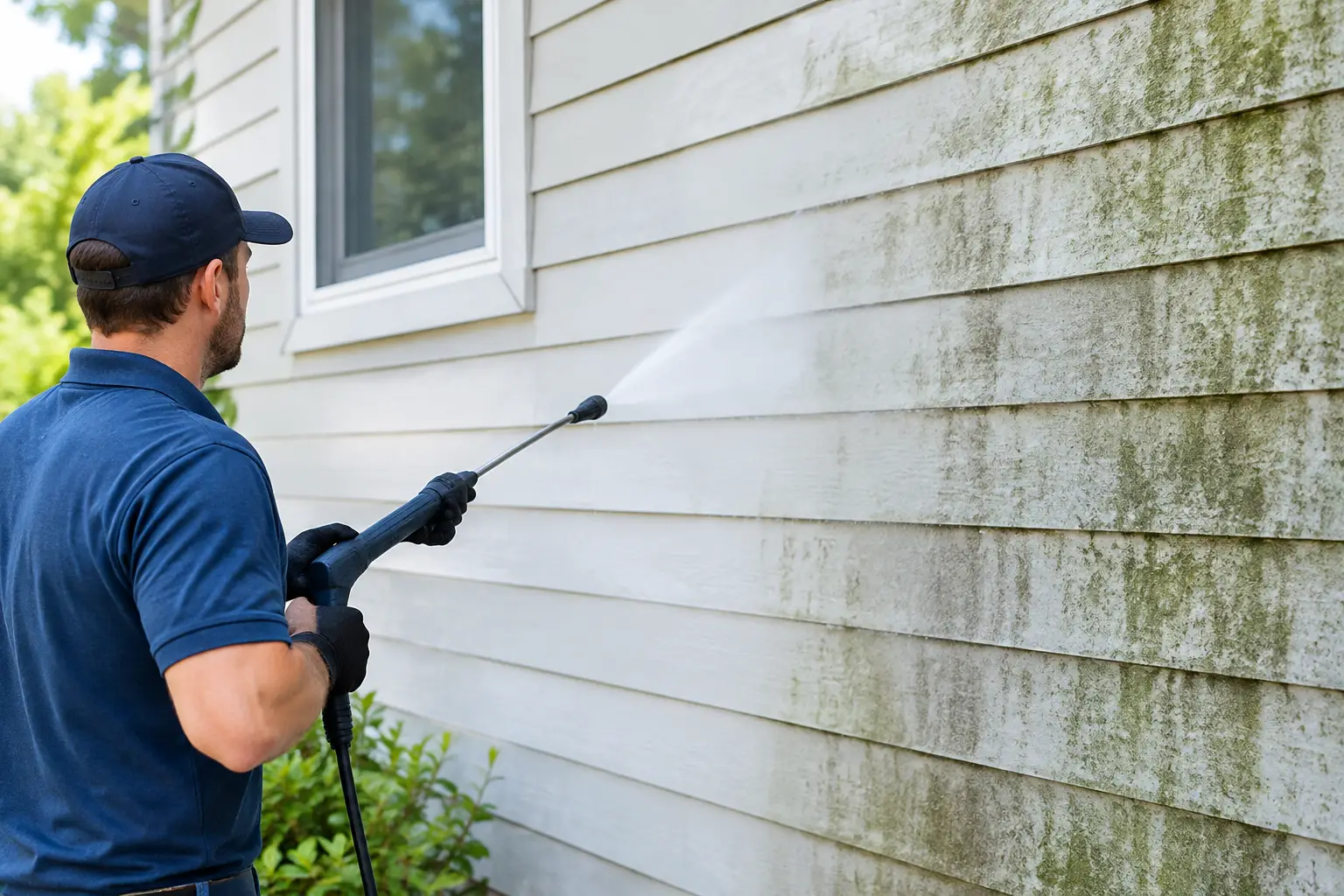
Professional soft washing uses a controlled, roof-appropriate application to address algae, moss, and other organic growth without blasting the shingle surface. The goal is to treat the growth at its source and allow the roof to clean up safely over time where needed. A careful crew also protects plants, siding, windows, gutters, and surrounding hardscapes throughout the process.
There is a trade-off homeowners should understand: aggressively scraping or pressure washing can make a roof look cleaner immediately, but it may damage the shingles. A safer process may require more patience, especially with established moss or lichen. Protecting the roof matters more than forcing an instant visual result.
Consider preservation when shingles are aging but still sound
Asphalt shingles contain oils that gradually diminish from heat, UV exposure, and weather. As they dry, they can lose flexibility and become more susceptible to cracking. When a roof remains structurally sound but is showing ordinary age-related drying, a plant-based shingle preservation treatment may be a practical option.
Roof Rescue Southern Westchester uses a USDA Certified Biobased shingle rejuvenation product designed to replenish lost oils in qualifying asphalt shingles. It is not roof paint, and it does not hide defects. It is a preservation step for roofs that pass inspection and still have usable life to protect.
For the right roof, preservation can cost at least 80% less than a full replacement. That does not mean every homeowner should choose it. The condition of the shingles, the age of the installation, existing repairs, ventilation, and evidence of leaks all matter. The honest recommendation may be cleaning and preservation, cleaning alone, repairs by a qualified roofer, or replacement planning.
Do Not Forget the Drainage System
A roof cannot perform well if water has nowhere to go. Clogged gutters and downspouts allow water to back up at the roof edge, spill near the foundation, and keep fascia boards damp. In wooded parts of New Rochelle, leaves, seed pods, and small branches can create repeat clogs faster than many homeowners expect.
Gutter cleaning should be part of any roof-care plan, especially before heavy fall leaf drop and after winter. If your home repeatedly collects debris, gutter guards may reduce maintenance, but the right type depends on roof pitch, tree coverage, and existing gutter condition. Guards are not a substitute for inspection, but they can be a worthwhile tool for the right property.
Also look at the ground below the downspouts. Water should discharge away from the foundation and not create erosion, pooling, or icy walkways. Roof restoration works best when the entire water-management path is doing its job.
Time the Work Around Weather and Roof Conditions
Roof cleaning and preservation are weather-dependent services. The roof must be dry enough for safe access and suitable product application. Rain, high winds, extreme cold, or freezing conditions can delay work for good reason. A professional should not rush a roof project just to meet a calendar date.
Spring is often a good time to assess winter damage and treat early algae growth. Late summer and fall can also work well, particularly when homeowners want to remove debris and prepare their exterior for wet, cold weather. If you have visible moss, active staining, or gutter overflow, waiting until a particular season is less important than scheduling an assessment before the condition worsens.
Questions to Ask Before You Approve Roof Work
The provider you choose should be able to explain the method in plain language. Ask whether the company is licensed and insured, how it protects plants and exterior surfaces, whether it uses pressure on asphalt shingles, and how it decides if a roof qualifies for preservation.
You should also ask what the crew found during inspection. Clear photos and a straightforward explanation are more valuable than a sales pitch. A trustworthy contractor will tell you when restoration is a good fit and when it is not.
For homeowners who want one dependable team for roof care, gutters, soft washing, and other exterior upkeep, recurring maintenance can make problems easier to catch early. It also removes the pressure of remembering every seasonal task yourself.
Your roof protects nearly everything you value inside your home. Give it the same practical attention you would give a heating system or foundation: inspect it early, address growth and drainage issues safely, and make decisions based on its condition rather than its appearance alone. Schedule your free roof assessment before a manageable maintenance need turns into a replacement decision.
continue reading
Related Posts
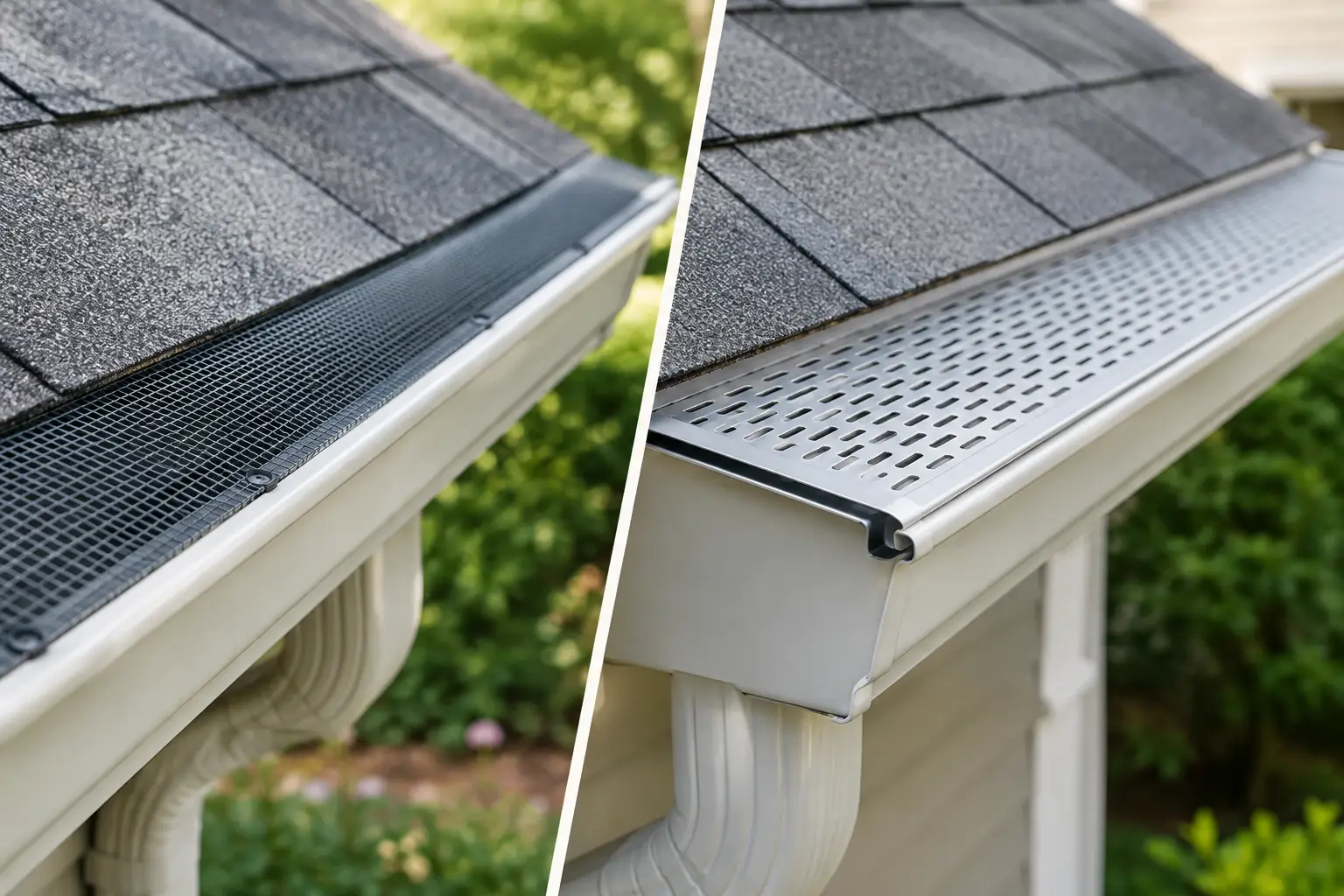
Comparing gutter screens versus guards? Learn which option fits Westchester homes, sheds leaves reliably, and reduces cleaning without trapping debris.
See what real roof cleaning results look like, how long they take, and why safe treatment can protect shingles and help avoid costly replacement bills.
Does soft washing kill mold? Learn how low-pressure cleaning removes exterior growth, when stains suggest damage, and how to protect your home safely.