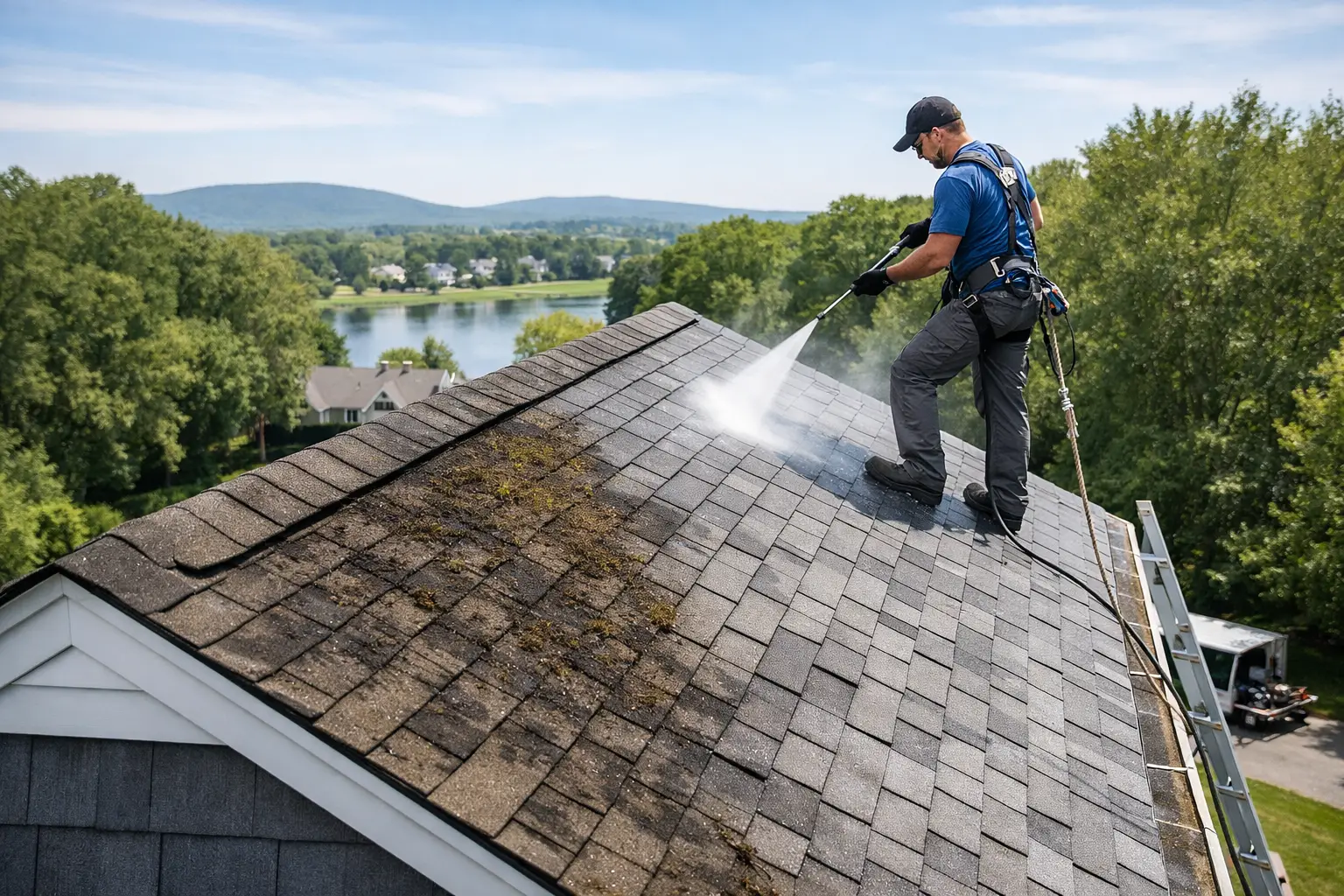
Black streaks spreading down a roof are more than a curb-appeal problem. For many homeowners, they are the first visible sign that moisture and organic growth are settling into an asphalt-shingle roof. Professional roof cleaning Westchester County homeowners rely on is a practical way to address that growth before it contributes to avoidable wear, drainage issues, and a conversation about replacing a roof too soon.
In Southern Westchester, mature trees, shaded lots, humid summer weather, falling leaves, and winter moisture all create favorable conditions for roof algae, moss, and lichen. A roof can look sound from the driveway while holding organic buildup that needs attention. The right response is not aggressive pressure washing or a one-size-fits-all treatment. It starts with an honest look at the roof’s condition and a cleaning method that protects the shingles underneath.
What Those Dark Roof Streaks Are Telling You
The dark staining common on asphalt roofs is often algae, especially a type that feeds on the limestone filler used in many shingles. It may begin as a few small streaks, then spread across the roof slope as moisture, shade, and time give it room to grow. It does not always mean the roof is failing, but it should not be dismissed as harmless dirt.
Moss and lichen deserve even closer attention. Moss holds water against the roof surface and can grow beneath shingle edges. In freezing weather, that retained moisture can expand and put additional stress on aging materials. Lichen attaches firmly to the shingle surface, so removing it carelessly can take protective granules with it.
Granules are the textured mineral layer on asphalt shingles. They help shield the asphalt beneath from ultraviolet exposure and weather. Some granule loss is normal over a roof’s life, but harsh cleaning can speed it up. That is why the goal is never simply to make a roof look bright for a photo. The goal is to remove damaging growth while preserving as much of the roof’s remaining protective surface as possible.
Why Roof Cleaning in Westchester County Requires a Careful Approach
A roof in New Rochelle, Scarsdale, Rye, or any of the surrounding communities may face very different conditions from one side of the property to the other. A south-facing roof can dry quickly and show mostly UV aging. A shaded north-facing roof may stay damp longer, develop algae earlier, and collect moss near overhanging limbs. Gutters, nearby trees, roof pitch, ventilation, and shingle age all affect what the roof needs.
For that reason, roof cleaning should begin with diagnostics, not a sales pitch. A professional assessment can identify whether stains are primarily algae, whether moss is lifting shingle tabs, whether gutters are backing up at the roofline, and whether the roof has enough remaining life for cleaning and preservation to make sense.
There are times when cleaning is not the right first recommendation. If shingles are severely curled, brittle, missing, or near the end of their usable life, a homeowner deserves that information directly. Cleaning cannot repair storm damage, correct poor installation, or turn a worn-out roof into a new one. It can, however, be a smart maintenance step for a roof that is structurally sound but burdened by organic growth and surface staining.
Why high pressure is the wrong tool for shingles
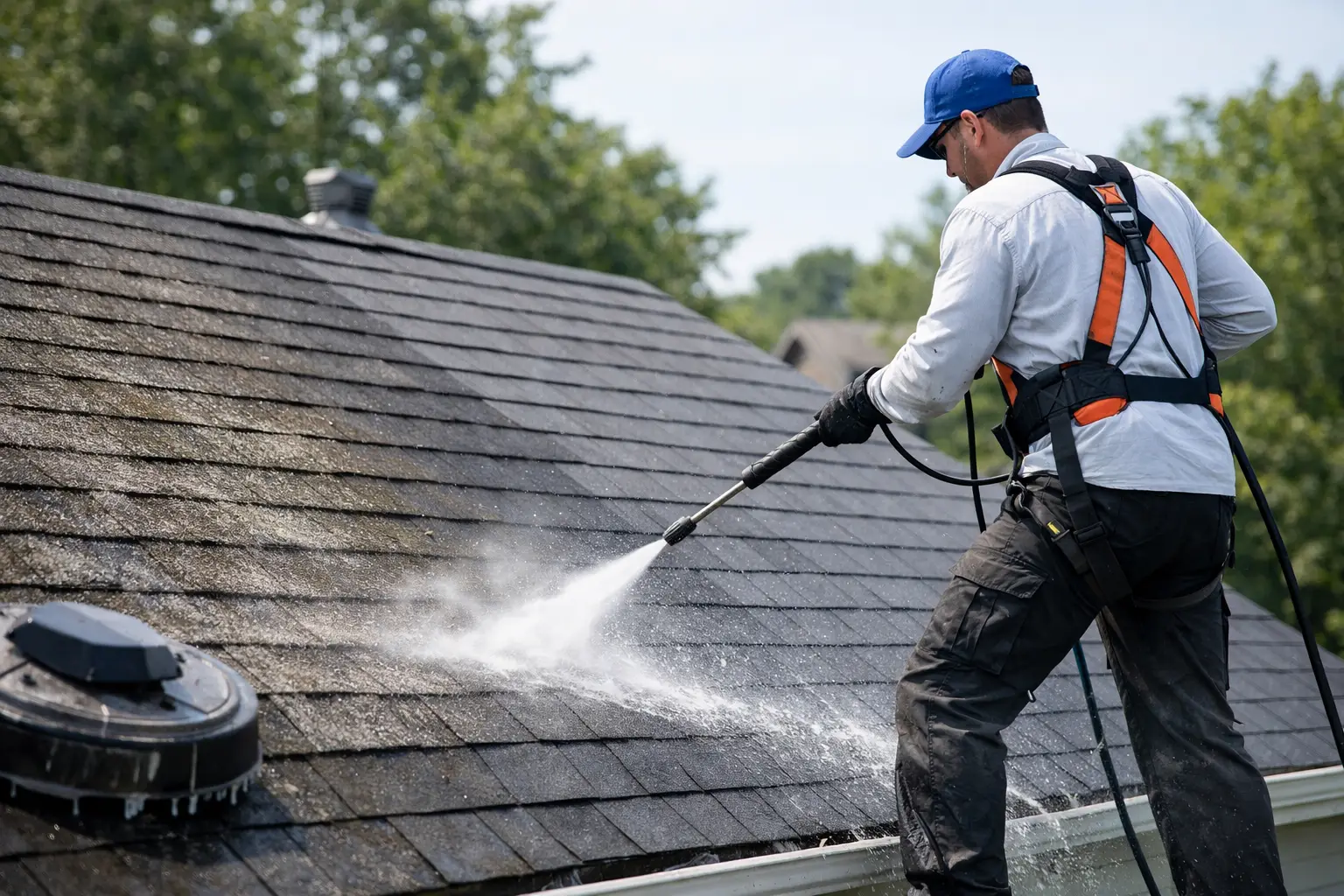
Pressure washing has a place on some exterior surfaces, such as certain concrete or hardscape areas when used correctly. Asphalt shingles are different. High pressure can strip granules, disturb shingle edges, force water where it does not belong, and shorten the life of a roof that may have had years of service left.
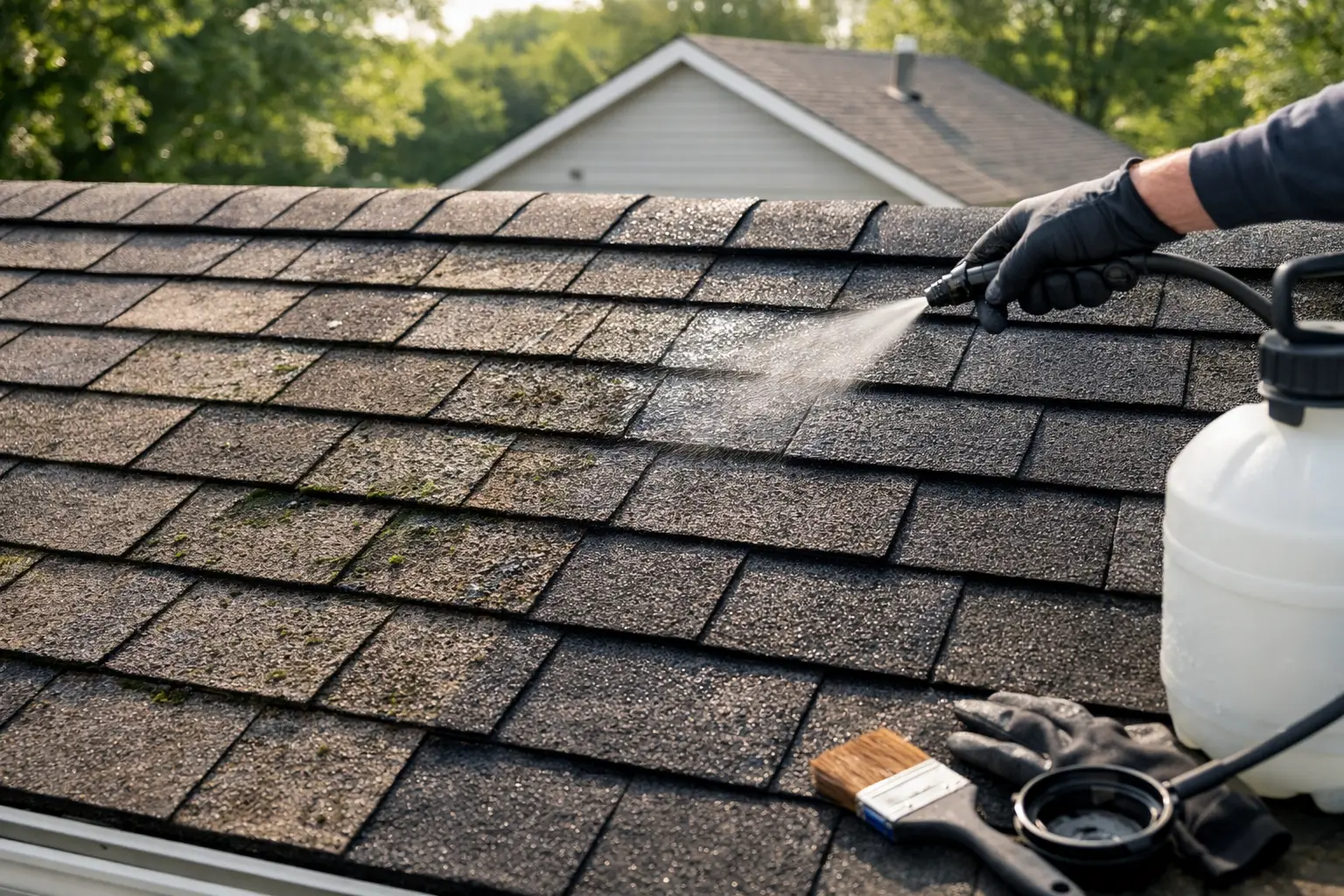
A careful soft-wash approach applies an appropriate cleaning solution at low pressure, allowing it to treat organic growth without the abrasion of blasting the roof surface. The process should also include protecting landscaping, managing runoff, and using safe access practices. A clean roof is not worth damaged shrubs, unsafe work, or unnecessary harm to the roofing material.
Cleaning Restores Appearance, but Preservation Addresses Aging
Roof cleaning removes visible algae, moss, and lichen. For many homeowners, that alone makes a dramatic difference. Dark streaks can make an otherwise well-kept home appear older, and a cleaner roof can restore a more uniform appearance from the street.
But appearance is only part of the conversation. Asphalt shingles lose flexibility as they age. Sun exposure, rain, temperature changes, and time can dry out the oils that help shingles remain pliable. As a roof becomes less flexible, it can be more vulnerable to cracking and weather-related wear.
For qualifying roofs, a plant-based shingle preservation treatment may be worth considering after cleaning. Roof Rescue Southern Westchester uses a USDA Certified Biobased treatment designed to replenish shingle flexibility and support the useful life of asphalt shingles. It is not a coating that hides damage, and it is not a substitute for replacing a roof that has reached the end of its life. It is a preventive option for homeowners who want to protect a roof that still has serviceable years ahead.
The financial difference can be significant. A preservation treatment generally costs a fraction of replacement, often at least 80% less than a full roof replacement. That does not mean every roof should be treated. It means a homeowner should have a clear, documented assessment before assuming replacement is the only path forward.
Signs It Is Time to Schedule an Assessment
You do not need to wait until a roof leak appears. By the time water is entering the home, the repair may involve more than the roof surface. It is wise to schedule an assessment when dark streaks are spreading, moss is visible along shingle edges, or the roof has become noticeably discolored beneath tree cover.
Also pay attention after a wet season or a period of heavy leaf drop. Clogged gutters can allow water to spill back toward the roofline, keep fascia areas damp, and create conditions that encourage growth. If you see roof debris accumulating in gutters, granules collecting near downspouts, or branches resting close to the roof, those are good reasons to have the full exterior checked.
An assessment is especially valuable for a roof that is roughly midway through its expected lifespan. At that stage, homeowners often have a choice: maintain and preserve a roof that remains in good condition, or let staining, debris, and moisture-related issues continue until replacement becomes more urgent. A straightforward evaluation helps make that choice based on the roof’s actual condition rather than guesswork.
The Exterior Systems Around Your Roof Matter Too
A roof does not work alone. Gutters carry water away from the roofline, downspouts direct it away from the foundation, and trees influence how quickly the roof dries after rain. If one part of that system is neglected, it can affect the others.
Gutter cleaning is a natural companion to roof care because a clean roof can still have drainage trouble when gutters are packed with leaves, seed pods, and granules. In neighborhoods with mature landscaping, gutter guards may help reduce recurring buildup, although they still need periodic inspection. Guards are not maintenance-free, and the best option depends on the roofline, tree cover, and existing gutter condition.
Driveways, siding, pavers, and concrete can also collect algae and mildew in shaded areas. Coordinating exterior maintenance can save time and help a property look consistently cared for, but each surface needs its own method. What is appropriate for concrete is not appropriate for shingles. A trustworthy contractor explains the difference instead of applying the same pressure and product everywhere.
What a Good Roof-Cleaning Recommendation Should Include
Homeowners should expect clear answers before any work begins. A useful recommendation identifies the type of growth present, explains the proposed cleaning method, and sets realistic expectations for the result. Some moss and lichen may release gradually after treatment rather than disappearing instantly, especially when protecting the shingle surface requires patience.
Photos are helpful because they let you see what is happening in areas that are difficult to view from the ground. They also create a baseline for future maintenance. If a contractor recommends preservation treatment, ask whether your roof qualifies, what the product is intended to do, how long the benefit is expected to last, and whether there are signs that replacement would be more responsible.
The best roof care is not about selling the biggest project. It is about protecting the home you have, addressing what can be maintained, and being candid about what cannot. If your roof is showing stains, moss, or signs of aging, schedule a free roof assessment and get a clear picture before a small maintenance issue becomes an expensive surprise.
continue reading
Related Posts
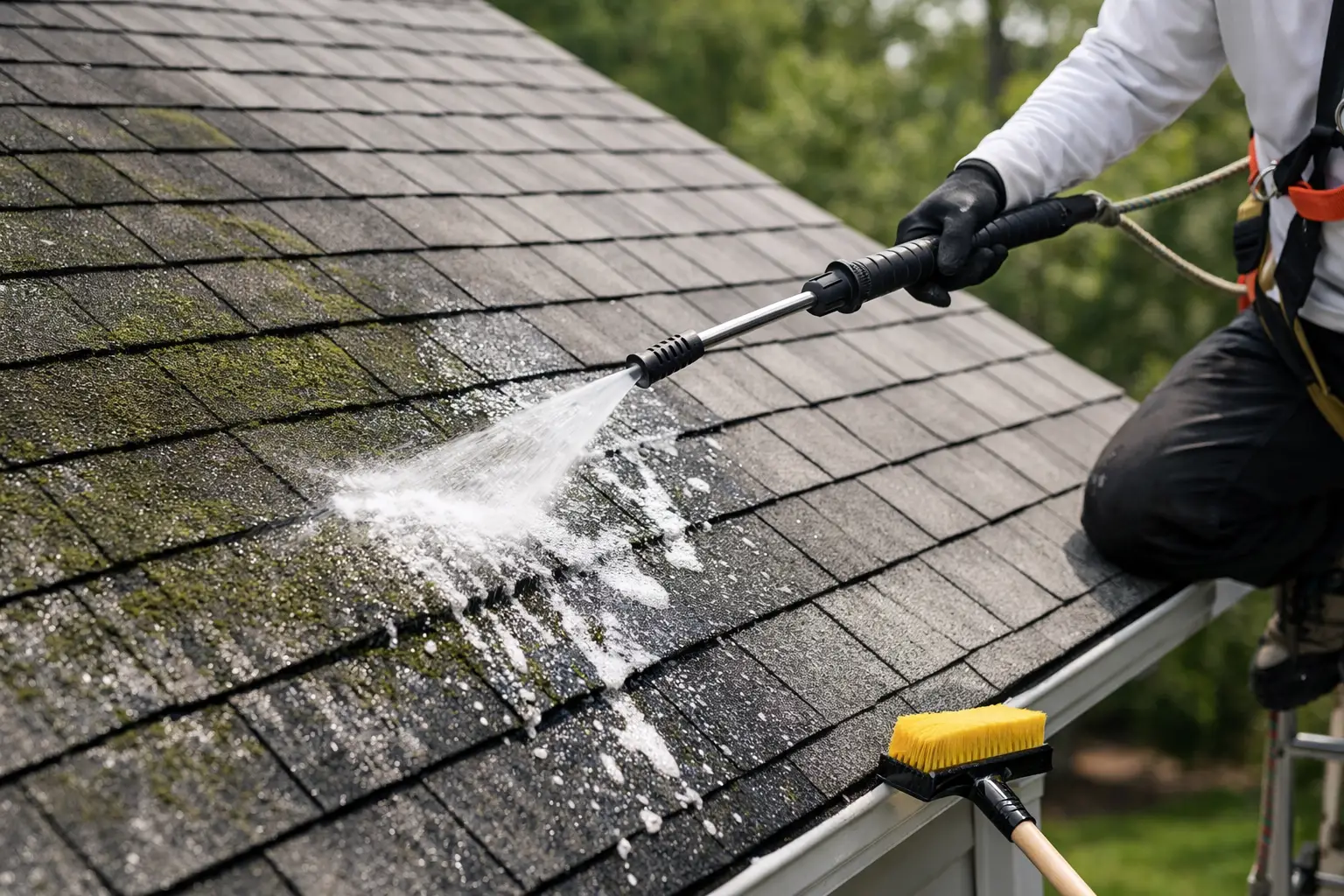
Learn how to remove algae from shingles safely, protect asphalt roofs, and avoid premature replacement with practical homeowner guidance in Westchester.
Roof cleaning removes algae, moss, and debris safely, helping Southern Westchester homeowners protect shingles, curb appeal, and roof life for years.
Learn how shingle preservation products can restore flexibility, slow roof aging, and help Westchester homeowners avoid premature replacement costs today.