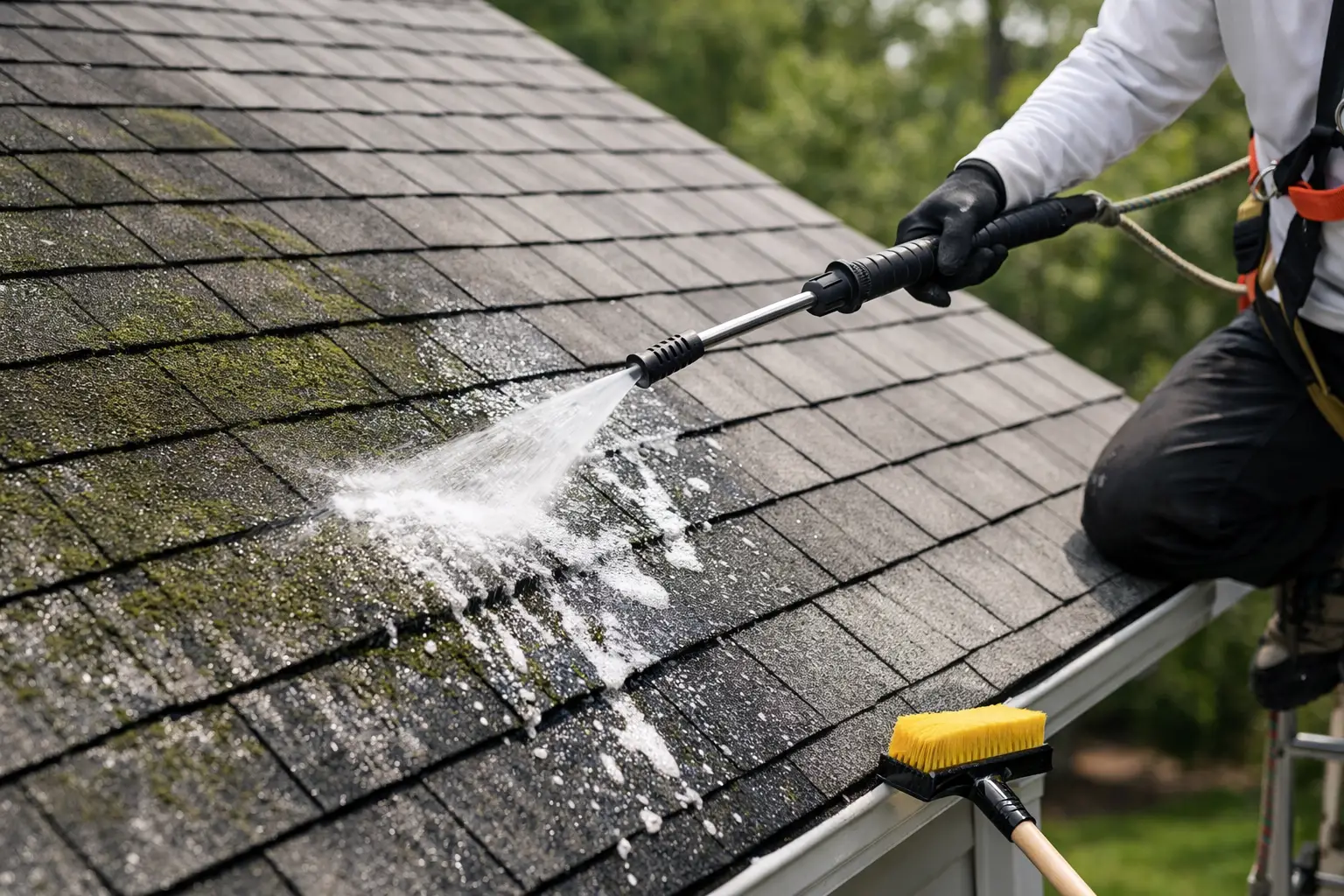
Those dark, streaky marks running down an asphalt-shingle roof are rarely dirt. In most cases, they are algae colonies feeding on moisture and minerals in the shingles. Knowing how to remove algae from shingles safely matters because an aggressive cleaning attempt can create a bigger problem than the staining itself – stripping protective granules, damaging shingles, or sending dirty runoff into landscaping.
For Southern Westchester homeowners, shaded streets, mature trees, humid summer weather, and seasonal leaf debris create ideal conditions for roof growth. The good news is that black algae streaks do not automatically mean you need a new roof. With the right diagnosis and a low-pressure treatment plan, many roofs can regain a cleaner appearance while continuing to protect the home for years.
What Those Black Roof Streaks Usually Mean
The most common roof stain is a blue-green algae called Gloeocapsa magma. It often appears as dark streaks on slopes that get less direct sun, although it can eventually spread across much of the roof. The organism uses moisture and airborne material for food, and it is also attracted to the limestone filler used in many asphalt shingles.
Algae is different from moss and lichen. Moss looks thick, green, and fuzzy. It can hold moisture against the roof surface and may lift shingle edges as it grows. Lichen forms flat, crusty patches that cling tightly to granules. These conditions often require more patience and a more careful treatment approach than ordinary algae staining.
Algae alone is frequently an appearance issue first. Still, it should not be ignored. Staining can hide cracked shingles, exposed nail heads, worn granules, and other roof conditions that deserve attention. It can also make a home look older than it is, affecting curb appeal when you want to maintain or sell the property.
Why Pressure Washing Is the Wrong Way to Remove Algae From Shingles
A roof may look tough from the ground, but asphalt shingles are not designed for high-pressure washing. The granules on the surface protect the asphalt layer beneath from UV exposure and weathering. A pressure washer can dislodge those granules, roughen the shingle surface, break seals between shingles, and force water where it does not belong.
Pressure also creates a safety issue. Wet shingles are slippery, and a worker trying to control a high-pressure wand on a pitched roof faces unnecessary risk. The goal is not to blast the roof clean. It is to treat the organic growth so it releases naturally without harming the roofing material.
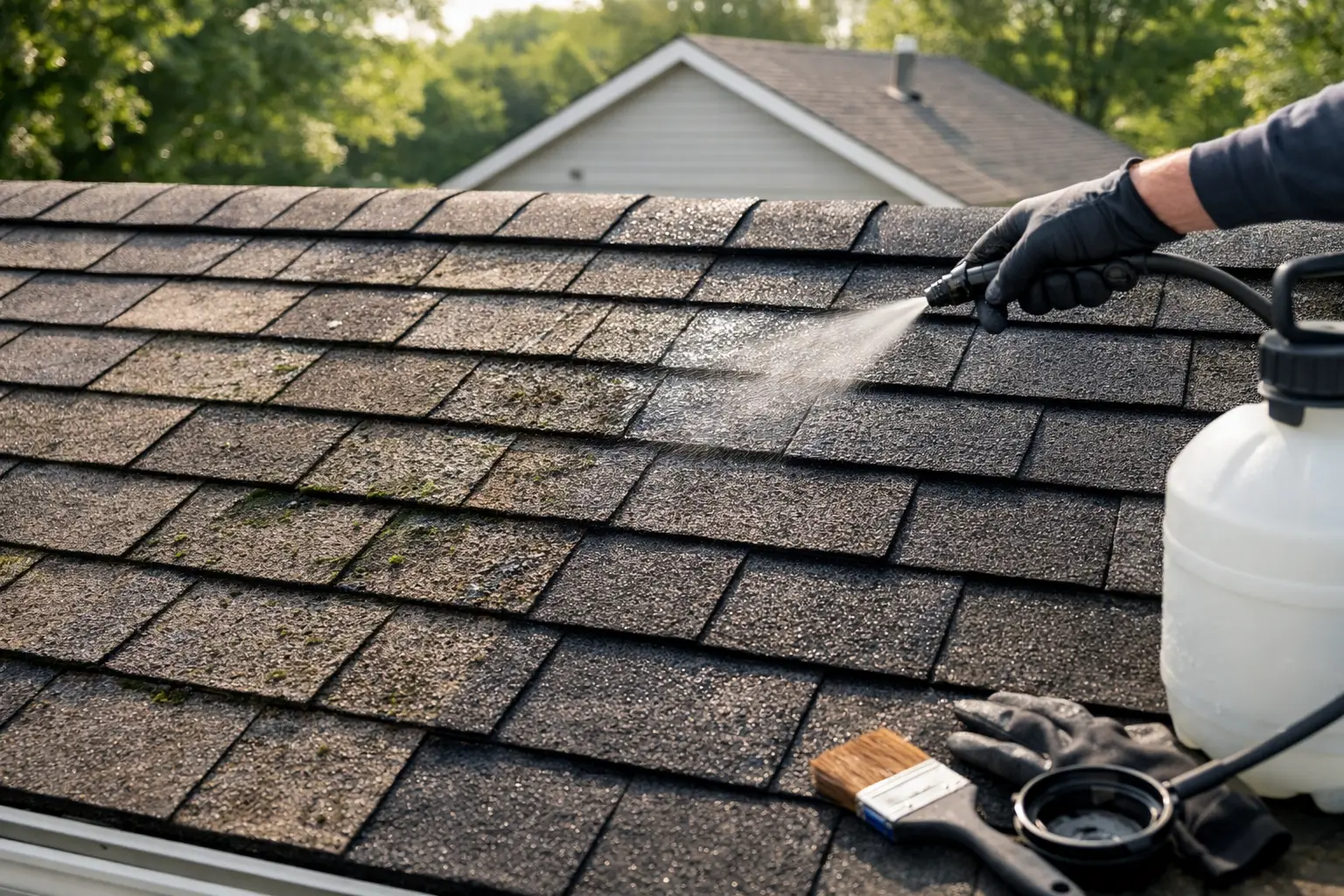
Professional roof cleaning typically uses a controlled soft-wash method. That means low-pressure application of an appropriate roof-safe treatment, careful management of runoff, and protection for plants, siding, gutters, and outdoor surfaces. The cleaning solution does the work, not the force of the water.
Start With a Roof Condition Check
Before treating stains, check whether the roof is a good candidate for cleaning. From the ground, look for missing shingles, curled tabs, visible bare spots, sagging areas, damaged flashing, or a large amount of granules collecting near downspouts. If you see any of those issues, cleaning should wait until a qualified professional assesses the roof.
Age matters, too. A roof near the end of its expected service life may benefit more from a condition assessment than a cosmetic wash. On the other hand, a roof with surface staining but sound shingles may be an excellent candidate for cleaning and preservation. A clear recommendation should be based on the roof you have, not a one-size-fits-all sales pitch.
Avoid climbing onto the roof for a closer look unless you have the training, equipment, and safe access to do so. Many roof problems can be documented with photos from a professional inspection. That gives you a better picture of the roof’s condition without putting yourself at risk.
The Safe Process for Cleaning Algae Stains
A responsible roof-cleaning process begins before any treatment is applied. Nearby plants should be identified and protected, gutters should be checked for blockages, and the crew should plan where runoff will travel. Landscaping is part of your property, not an afterthought.
The treatment is then applied at low pressure according to the roof’s material, slope, condition, and level of growth. A proper application reaches the affected areas without flooding the roof or driving water under the shingles. Technicians should never scrape aggressively or use stiff brushes that pull away granules.
Results are not always instant. Some algae staining lightens quickly, while heavier growth may continue to release over several days or weeks as normal rainfall rinses the roof. Moss and lichen can take longer because they are more firmly attached. Trying to speed up that process with pressure or scraping is where unnecessary damage often happens.
After treatment, the roof should be reviewed for any areas that need follow-up. A good contractor will also point out visible maintenance concerns, such as clogged gutters, overhanging branches, or worn flashing, rather than treating the stain and leaving the underlying conditions unaddressed.
Protect Your Plants, Pets, and Property
Roof-cleaning solutions must be handled carefully. The right product, dilution, application rate, and runoff control are all part of protecting the property. Shrubs, flower beds, lawns, painted surfaces, and outdoor furniture may need to be pre-wet, covered when appropriate, and rinsed thoroughly during and after the work.
Keep children and pets away from the work area until the cleaning crew confirms it is safe. Close windows, move patio cushions and grills when requested, and make sure exterior water access is available if the contractor needs it for plant protection and rinsing.
Be cautious with online do-it-yourself formulas. Household bleach mixtures, detergents, and improvised additives can stain siding, harm plants, discolor metals, or create runoff concerns when used incorrectly. Mixing chemicals is especially risky. A product that seems harmless in a bucket can become a problem when it runs through gutters and onto landscaping.
Preventing Algae From Returning
No cleaning method can change the weather, but homeowners can reduce the conditions that help algae return. Keep gutters moving freely so water does not back up along the roof edge. Remove leaves, needles, and branches that hold dampness against shingles. When possible, trim limbs that heavily shade the roof while respecting the health and structure of the tree.
Ventilation also matters. A poorly ventilated attic can contribute to excess heat and moisture, which affects the roof system from underneath. If you notice condensation in the attic, unusually high cooling costs, or recurring roof-edge issues, it may be worth having ventilation evaluated alongside the roof cleaning.
Some homeowners also consider a shingle preservation treatment after cleaning. This is not a substitute for repairs on a failing roof, and it will not restore missing material. However, when used on qualifying asphalt shingles, a USDA Certified Biobased treatment can help replenish lost oils, improve shingle flexibility, and support a longer useful service life. Compared with premature replacement, preservation can be a practical option when the roof structure and shingles remain fundamentally sound.
When to Call a Professional
A homeowner can safely handle simple ground-level tasks, such as clearing loose debris from accessible gutters or scheduling tree trimming. The roof itself is different. Call a professional when stains cover a large area, moss or lichen is visible, the roof is steep, the property has extensive landscaping, or you are unsure whether the shingles are still in good condition.
For homeowners in New Rochelle, Scarsdale, Rye, Larchmont, and surrounding Southern Westchester communities, Roof Rescue Southern Westchester provides roof assessments that focus on practical next steps. That may mean safe soft washing, preservation treatment, repairs through the appropriate roofing professional, or simply monitoring a roof that does not need immediate work.
A clean roof should never come at the cost of a shorter roof life. If dark streaks are making your home look tired, start with a careful assessment and choose a treatment that protects the shingles, your landscaping, and the investment beneath them.
continue reading
Related Posts
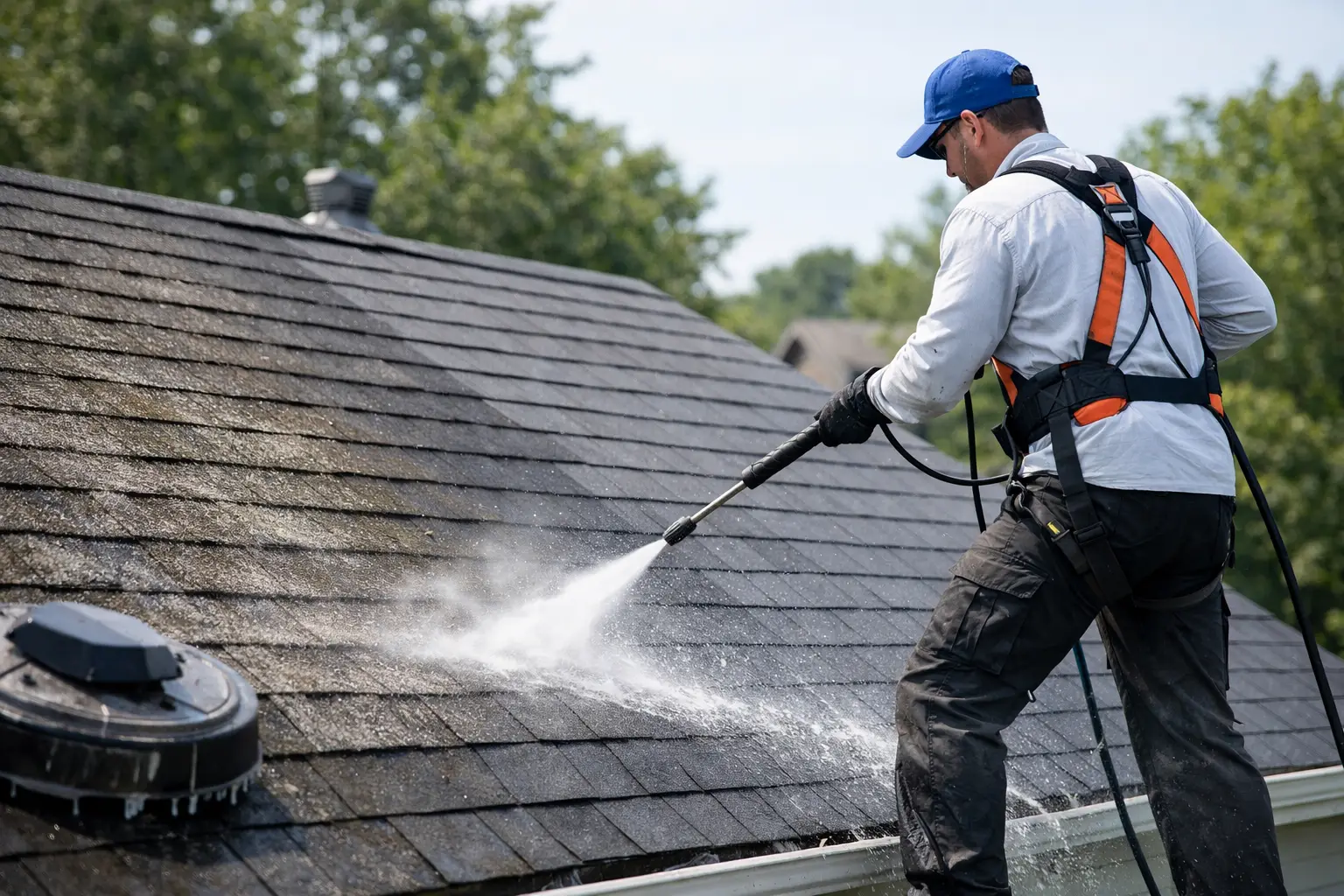
Roof cleaning removes algae, moss, and debris safely, helping Southern Westchester homeowners protect shingles, curb appeal, and roof life for years.
Learn how shingle preservation products can restore flexibility, slow roof aging, and help Westchester homeowners avoid premature replacement costs today.

Homeowner roof savings begin with safe cleaning, gutter care, and shingle preservation to help prevent costly, premature roof replacement costs today.