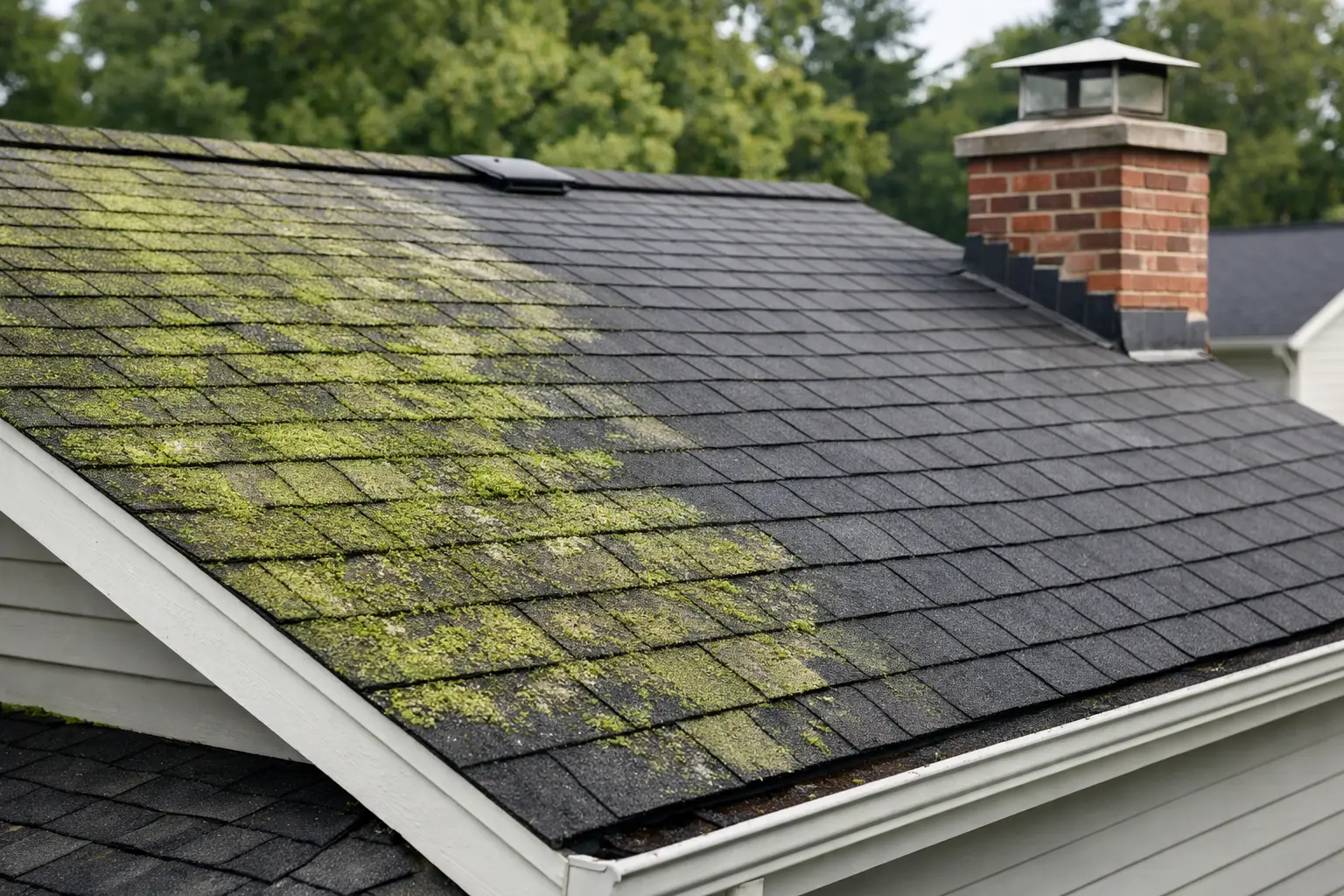
Those black streaks across an asphalt-shingle roof are easy to dismiss as a cosmetic issue. But does algae weaken roofing? On its own, algae is not likely to eat through a sound shingle the way rot can damage wood. Still, leaving organic growth in place can contribute to the conditions that shorten a roof’s useful life, hide developing problems, and make an aging roof look worse than it is.
For homeowners in Southern Westchester, where shaded lots, mature trees, humidity, and seasonal leaf debris are common, roof algae is more than a curb-appeal concern. The right response is not panic or a high-pressure cleaning. It is a clear assessment, safe removal, and practical maintenance that protects the shingles you already own.
Does Algae Weaken Roofing or Just Stain It?
Most dark roof streaks are caused by Gloeocapsa magma, a blue-green algae that feeds on moisture and airborne nutrients. It commonly begins on the north-facing roof slope or beneath overhanging trees, then spreads across the roof as conditions allow. The dark color comes from a protective pigment that helps the organism tolerate sunlight.
Algae does not usually break down asphalt shingles directly. That distinction matters. A stained roof is not automatically a failing roof, and no honest contractor should treat staining alone as proof that replacement is needed.
The concern is cumulative. Algae holds moisture on the roof surface and often appears alongside other organic material, including lichen, moss, leaves, and twigs. That lingering moisture can keep shingles damp longer after rain or morning dew. On an older roof with worn granules, small cracks, lifted edges, or poor drainage, the added moisture burden may accelerate deterioration that was already underway.
Algae can also make it harder to see the true condition of a roof. Black staining can conceal granule loss, damaged shingles, exposed nail heads, or early moss growth. A roof may still have years of service left, but homeowners need a clean, visible surface and a proper inspection to make that call with confidence.
Why Algae Can Become a Bigger Roof Problem
The risk changes depending on the roof’s age, material, slope, shade, and overall maintenance. A newer asphalt-shingle roof with light algae staining may only need a careful soft wash. An older roof with algae, moss, clogged gutters, and visible granule loss deserves a closer look before anyone recommends cleaning or preservation.
Here is how neglected growth can create trouble over time:
- Moisture stays where it should not. Algae, moss, and roof debris slow drying. Repeated wet-dry cycles can be harder on aging shingles, flashing, and vulnerable roof edges.
- Moss causes more direct damage. Unlike algae, moss has a thicker structure that can grow beneath shingle edges, lift them, and trap water. Moss needs prompt attention because it can interfere with proper water shedding.
- Granules may loosen faster on worn shingles. Granules protect the asphalt layer from ultraviolet exposure. Aggressive scrubbing or pressure washing can remove them immediately, while a roof that remains wet and dirty may deteriorate more quickly over the long term.
- Gutters and drainage suffer. Leaves, shingle grit, and organic buildup can clog gutters. When water backs up near the roof edge, it increases the chance of fascia damage, overflow, and moisture intrusion.
The main lesson is simple: algae alone is rarely the emergency. The combination of algae, moisture, debris, moss, and an aging shingle system is what turns a manageable maintenance issue into an expensive one.
What Roof Algae Does Not Mean
A black-streaked roof does not automatically need replacement. Homeowners are often told otherwise because a dirty roof can look severely aged from the street. In many cases, safe roof cleaning dramatically improves appearance and reveals shingles that are still performing well.
At the same time, cleaning cannot reverse every kind of roof wear. If shingles are brittle, curling, cracked, missing, or have widespread granule loss, washing alone is not a repair. A careful contractor should explain what cleaning can accomplish, what it cannot, and whether the roof is a candidate for a preservation treatment.
That balanced approach protects homeowners from two costly mistakes: replacing a roof prematurely or spending money to clean a roof that has already reached the end of its serviceable life.
The Safe Way to Remove Algae From Asphalt Shingles
Asphalt shingles are not driveway pavers. They should never be treated as a surface that can withstand aggressive pressure washing. High-pressure water can strip protective granules, break the seal between shingles, drive water beneath the roofing, and shorten the life of the very roof you were trying to save.
A professional soft-wash approach uses low pressure and a roof-appropriate cleaning solution to treat organic growth without blasting the shingle surface. The treatment is applied carefully, allowed to work, and managed with attention to landscaping, gutters, siding, and nearby outdoor areas. Heavy moss may require extra care because it should not be ripped aggressively from the shingles.
Cleaning also works best when the conditions that encouraged algae are addressed. Trim branches that keep the roof in constant shade when practical. Keep gutters clear so water moves away from the roof edge. Remove leaf buildup from valleys and behind chimneys. These small steps help the roof dry faster and make repeat growth less likely.
When Shingle Preservation May Make Sense
A clean roof tells a more accurate story. If an inspection shows that asphalt shingles are weathered but still structurally sound, a plant-based shingle preservation treatment may be worth considering. These treatments are designed to help replenish oils lost through years of sun exposure and weathering, improving shingle flexibility and supporting continued performance.
This is not a substitute for replacement when there are active leaks, widespread damage, or shingles that are no longer viable. It is a maintenance option for qualifying roofs, much like sealing and maintaining other exterior surfaces before they fail.
Roof Rescue Southern Westchester uses a USDA Certified Biobased shingle rejuvenation product for appropriate asphalt-shingle roofs. For a homeowner trying to avoid an unnecessary replacement, preservation can cost substantially less than installing a new roof while helping extend the usable life of shingles that still have value left in them.
Signs It Is Time for a Professional Roof Assessment
You do not need to climb a ladder to make a smart maintenance decision. From the ground, look for streaking that is spreading quickly, green moss at shingle edges, heavy debris in valleys, sagging gutters, or areas that remain damp long after the rest of the roof dries. Check your attic or upper ceilings for water stains, damp insulation, or musty odors as well.
A professional assessment is especially worthwhile if your roof is more than a decade old, you have had storm damage, or you are unsure whether the dark areas are algae, moss, lichen, or ordinary weathering. Photos and a straightforward explanation of the roof’s condition should come before a recommendation for cleaning, treatment, repair, or replacement.
Protect the Roof Before the Stains Become the Story
Roof algae is often your home’s early reminder that moisture and organic debris are getting too comfortable overhead. Address it while the roof is still accessible, visible, and maintainable. A safe cleaning and honest inspection can restore the appearance of your home, identify issues that deserve attention, and help you spend your maintenance budget where it will do the most good.
If dark streaks, moss, or clogged gutters are raising questions about your roof, schedule your free roof assessment and get a clear recommendation before a small maintenance issue becomes a larger expense.
continue reading
Related Posts
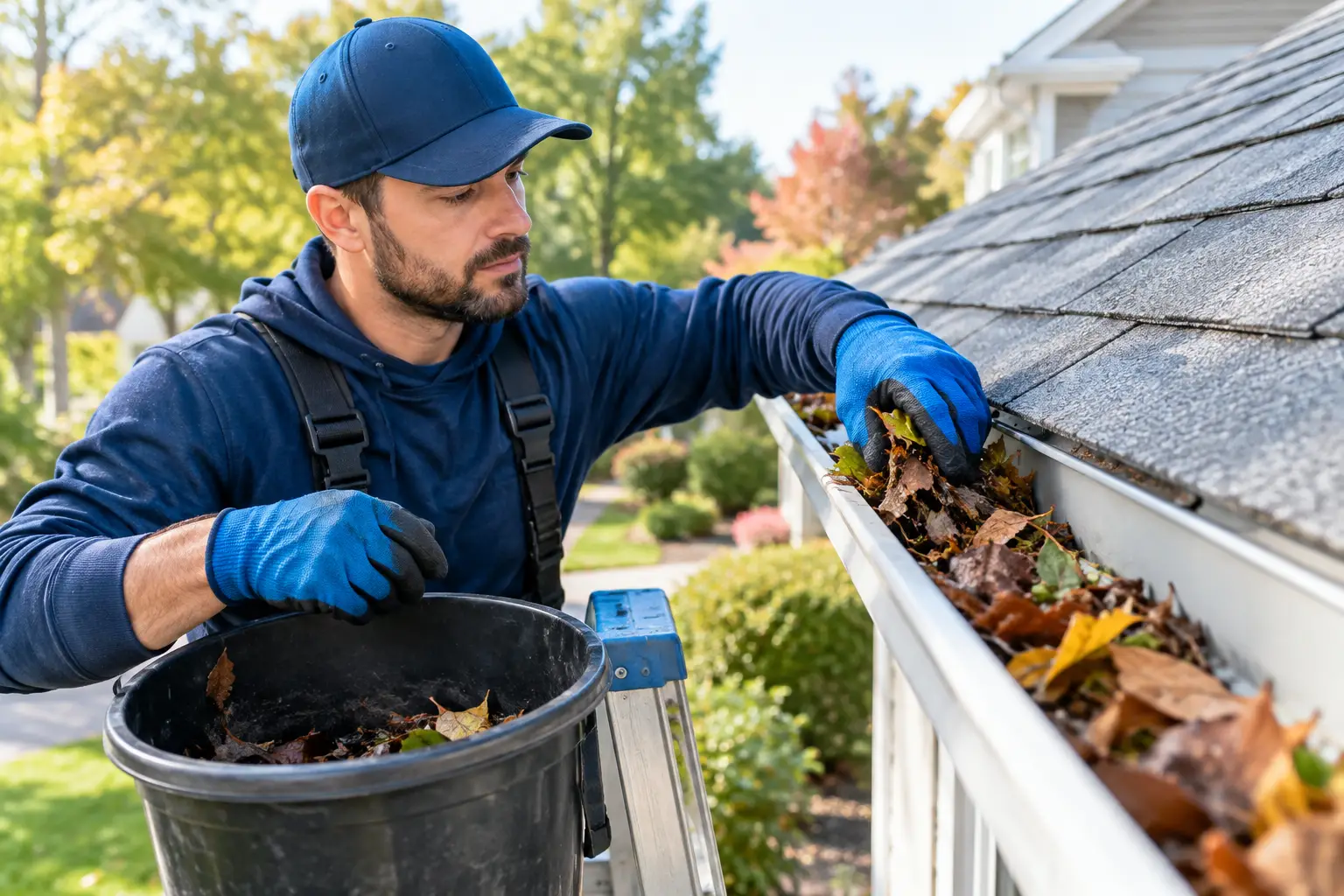
Scarsdale gutter cleaning reviews can reveal a lot. Learn which details point to safe, reliable service, fair pricing, and lasting protection for homes.
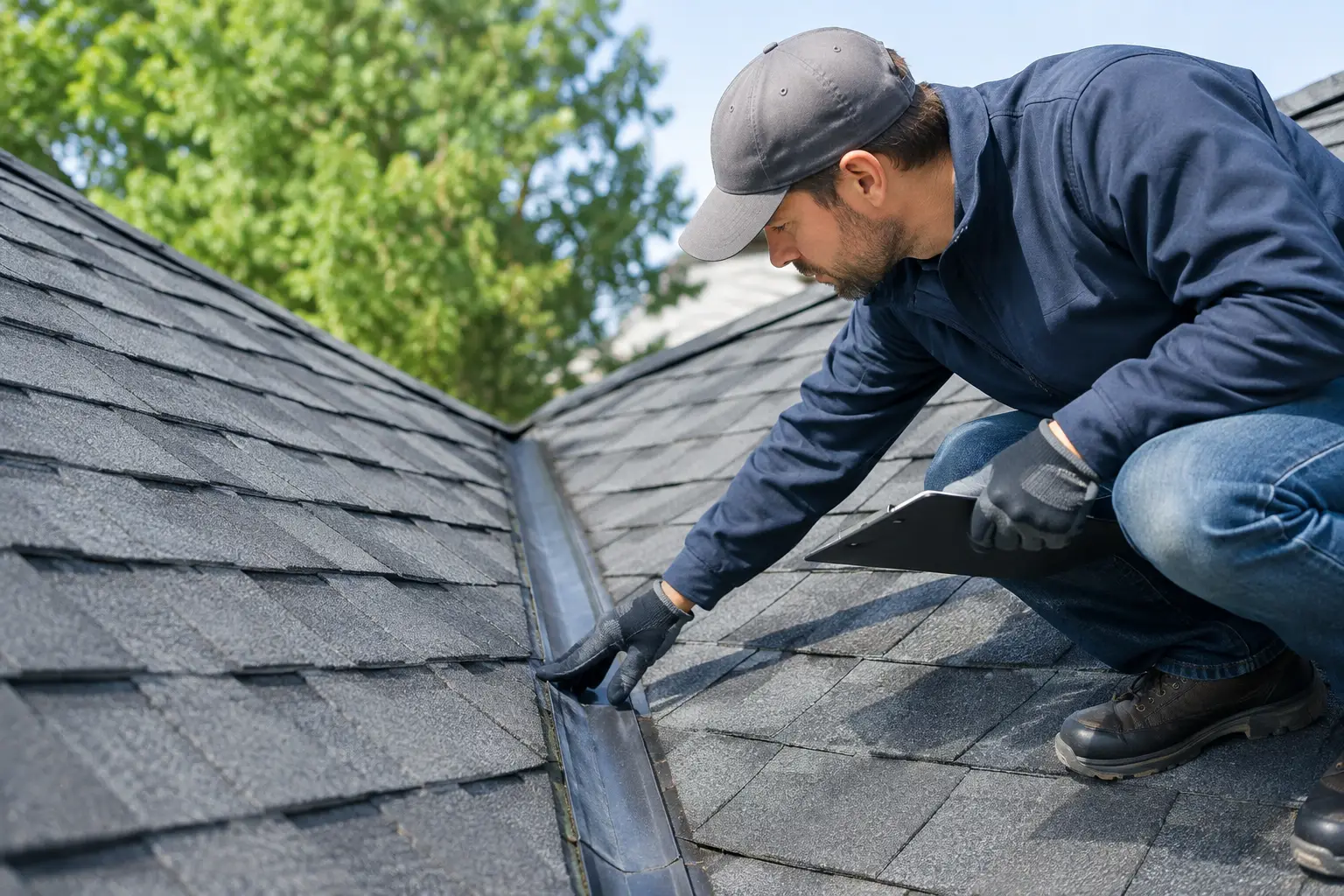
Learn how to maintain roof valleys safely, spot early trouble, protect shingles, and know when a Southern Westchester professional should step in today.
Roof restoration can clean, protect, and extend shingle life. Learn when maintenance makes sense and when replacement is the safer call for your home.