
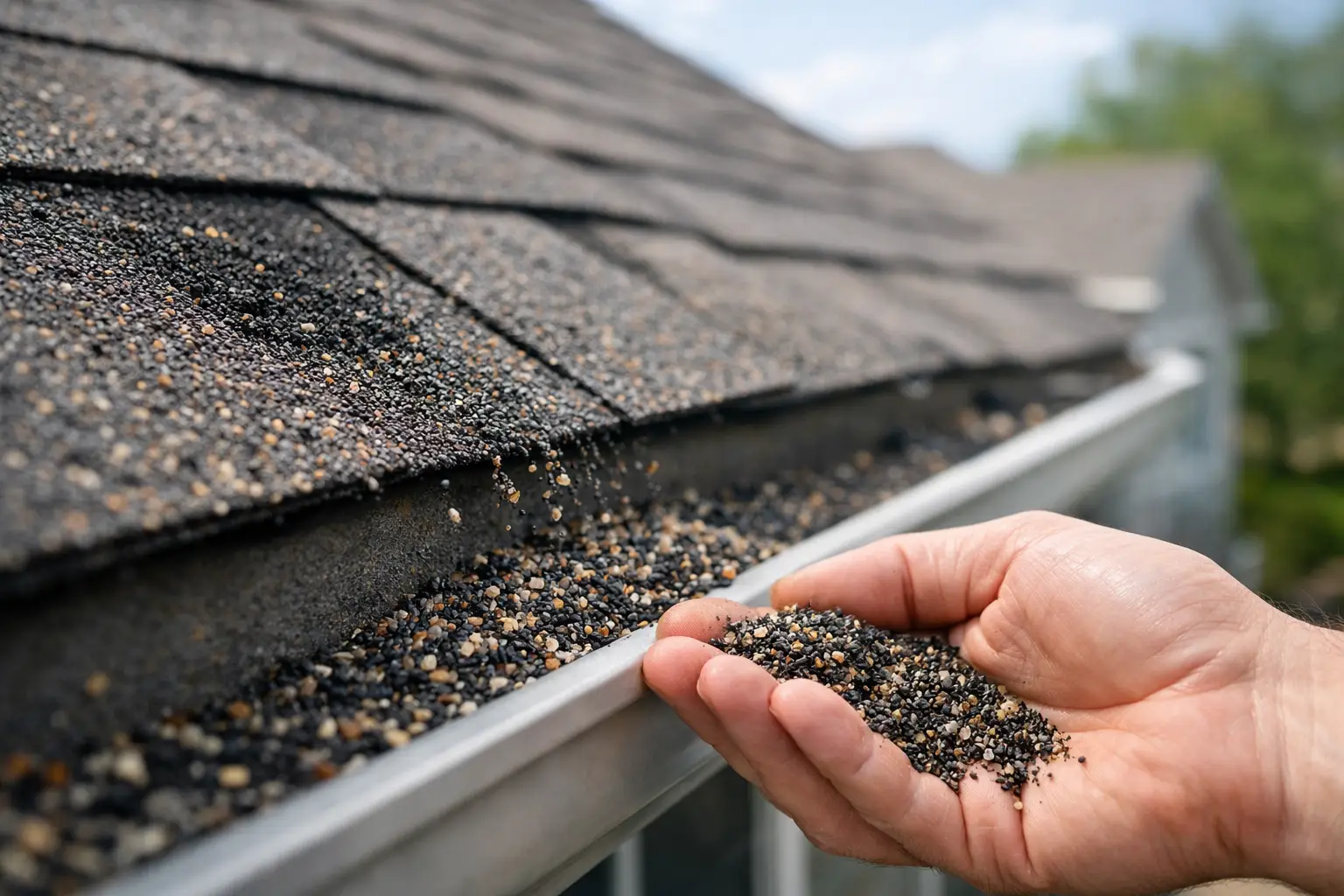
A few loose granules in a gutter do not automatically mean your roof is failing. But homeowners should understand why shingles lose granules, because those small, sand-like pieces are a roof’s first line of defense against sunlight, weather, and everyday wear.
Asphalt shingles are built in layers. The visible mineral granules protect the asphalt coating below from UV exposure, help with fire resistance, and give the roof its color and texture. When granules come loose faster than they should, the shingle can dry out, crack, and become more vulnerable to leaks. The key is knowing the difference between normal shedding and a warning that your roof needs attention.
Why Do Shingles Lose Granules?
Granule loss happens for several reasons, and the cause affects what should happen next. A roof that is simply shedding leftover manufacturing granules needs a different response than a roof with age-related deterioration, storm damage, or organic growth holding moisture against the shingles.
Some Granule Loss Is Normal on a New Roof
New asphalt shingles often release a small amount of excess granules after installation. Manufacturers apply more granules than necessary so the shingle has full coverage after handling, delivery, and installation. Rain carries some of that loose material into gutters and downspouts during the first months after a roof is installed.
A light, occasional amount of grit in the gutters is usually not cause for alarm, especially if the roof is new and the shingles look evenly covered. What is not normal is seeing large piles of granules, bare black patches, exposed fiberglass mat, or noticeably different-looking areas across the roof.
Age and Sun Exposure Wear Down the Surface
In Southern Westchester, roofs see hot summer sun, winter freeze-thaw cycles, wind, rain, and seasonal temperature swings. Over time, UV rays break down the asphalt oils that keep shingles flexible. As the asphalt becomes drier and more brittle, it loses its grip on the protective granules.
This is one of the most common answers to why shingles lose granules on roofs that are well into their expected service life. The loss may begin gradually, often on south-facing or west-facing slopes that receive the strongest afternoon sun. Those roof sections can age faster than shaded areas, even when the entire roof was installed at the same time.
Granule loss caused by normal aging cannot always be reversed. However, catching drying and surface wear before shingles are cracked, curled, or leaking may create an opportunity for a professional preservation treatment rather than an immediate replacement.
Moss, Algae, and Debris Hold Moisture on the Roof
Dark streaking, green moss, and leaf buildup are more than curb-appeal issues. Algae can discolor shingles, while moss and trapped debris retain moisture on the roof surface. That repeated wetness can accelerate deterioration, particularly along shaded rooflines and beneath overhanging trees.
Moss can also grow under shingle edges, lifting them slightly and exposing them to wind and water. As shingles flex and lose protective oils, granules can loosen. A roof with organic growth should be cleaned with a low-pressure, shingle-safe process. Pressure washing can blast away granules and shorten the roof’s remaining life, even if the roof looks cleaner afterward.
Hail, Wind, and Falling Branches Can Knock Granules Loose
Storm damage often creates concentrated granule loss rather than uniform wear. Hail strikes may leave small, circular impact marks where granules have been knocked away. Strong winds can bend shingles upward and weaken their surface. A branch scraping or falling onto the roof may create localized scuffing.
After a major storm, check the ground, gutters, and downspout outlets for an unusual amount of gritty material. From the ground, look for displaced shingles, torn tabs, or obvious dark spots. Do not climb onto the roof to inspect it yourself. Walking on older shingles can cause additional damage, and roof work carries real fall risks.
Poor Attic Ventilation Speeds Up Shingle Aging
A roof does not only age from the outside. Excess attic heat can bake shingles from beneath, causing the asphalt to dry out faster. Moisture buildup in an attic can also contribute to deck problems and reduce the roof system’s overall performance.
Ventilation issues are not always obvious from the street. Signs may include unusually high attic temperatures, condensation, mold-like staining on framing, ice dams in winter, or shingles that appear to age prematurely. A proper assessment should consider the full roof system, not just what is visible from the driveway.
Installation Problems and Foot Traffic Matter, Too
Improper installation can create premature wear. Shingles may be over-nailed, under-nailed, poorly aligned, or installed over a surface that does not provide adequate support. Excessive foot traffic from tradespeople, satellite installations, or repeated DIY inspections can scuff granules and damage brittle shingles.
That does not mean every roof problem is an installation failure. It means the pattern of wear matters. Uniform aging across an older roof points to one issue, while damage limited to walk paths, valleys, flashing areas, or a single slope may point to another.
How Much Granule Loss Is Too Much?
A small amount of grit in a gutter is common. Heavy accumulation that resembles coarse sand is not. The same goes for shingles with bare spots, visible black asphalt, exposed fiberglass, deep cracking, curling edges, or a patchy appearance where color has worn away.
Granule loss becomes more concerning when it appears alongside other symptoms: recurring leaks, missing shingles, lifted tabs, soft spots in the roof deck, or water stains on ceilings. At that stage, the roof may be nearing the end of its useful life, and maintenance alone may not be the responsible recommendation.
Homeowners should also pay attention to timing. If your roof is only a few years old and suddenly sheds a large amount of granules after a storm, an inspection is wise. If the roof is approaching 15 to 25 years old, depending on its shingle type, installation quality, ventilation, and exposure, gradual granule loss may be part of a larger aging pattern.
What to Do When You Find Granules in the Gutters
Start by looking for context, not just the granules themselves. Are the gutters clogged with leaves and roof grit? Are there dark streaks, moss, or bare-looking patches on the shingles? Has there been hail, high wind, or a fallen limb recently? Has the roof begun to look uneven in color?
Keep gutters clear so water can move away from the roof edge and foundation. Clogged gutters can hold water against the fascia and lower roofline, creating a separate moisture problem. Still, avoid treating gutter cleaning as a roof diagnosis. Granules in a gutter tell you something may be happening, but they do not identify the cause on their own.
Avoid sweeping, brushing aggressively, or pressure washing shingles. These methods can remove more granules than they save. Likewise, avoid coating a failing roof with a product intended to hide its age. A preservation treatment is most valuable when shingles are still structurally sound and have remaining service life to protect.
Can Shingle Preservation Help?
It depends on the roof’s condition. If shingles are intact but beginning to dry, lose flexibility, or show early surface wear, a professional shingle preservation treatment may help replenish lost oils and support flexibility. Roof Rescue Southern Westchester uses a USDA Certified Biobased treatment designed for qualifying asphalt-shingle roofs, offering a practical option that can cost far less than a full replacement.
This is not a substitute for replacement when shingles are severely brittle, curled, missing, leaking, or stripped of granules across large areas. A trustworthy recommendation should be based on the roof in front of you, not a one-size-fits-all sales pitch. Photos, a close visual review, and a clear explanation of the findings help homeowners make the right decision for their property.
When to Schedule a Roof Assessment
Schedule an assessment when you see heavy granule buildup, bare spots, widespread discoloration, moss growth, storm impacts, or signs of interior water intrusion. It is also smart to have an aging roof reviewed before small concerns turn into emergency repairs.
The goal is not to find a reason to replace a roof early. It is to understand what is happening, remove damaging organic growth safely when appropriate, and protect a roof that still has useful life left. A careful inspection now can replace uncertainty with a clear plan for keeping your home protected.
continue reading
Related Posts

Scarsdale gutter cleaning reviews can reveal a lot. Learn which details point to safe, reliable service, fair pricing, and lasting protection for homes.

Learn how to maintain roof valleys safely, spot early trouble, protect shingles, and know when a Southern Westchester professional should step in today.

Roof restoration can clean, protect, and extend shingle life. Learn when maintenance makes sense and when replacement is the safer call for your home.